


Canada names its submarine supplier in Ankara. Here’s what Canadian defence SMEs need to know.
The NATO Ankara Summit takes place this week (Jul. 7-8). PM Carney joins 31 allied leaders as NATO prepares to announce tens of billions in new defence contracts.
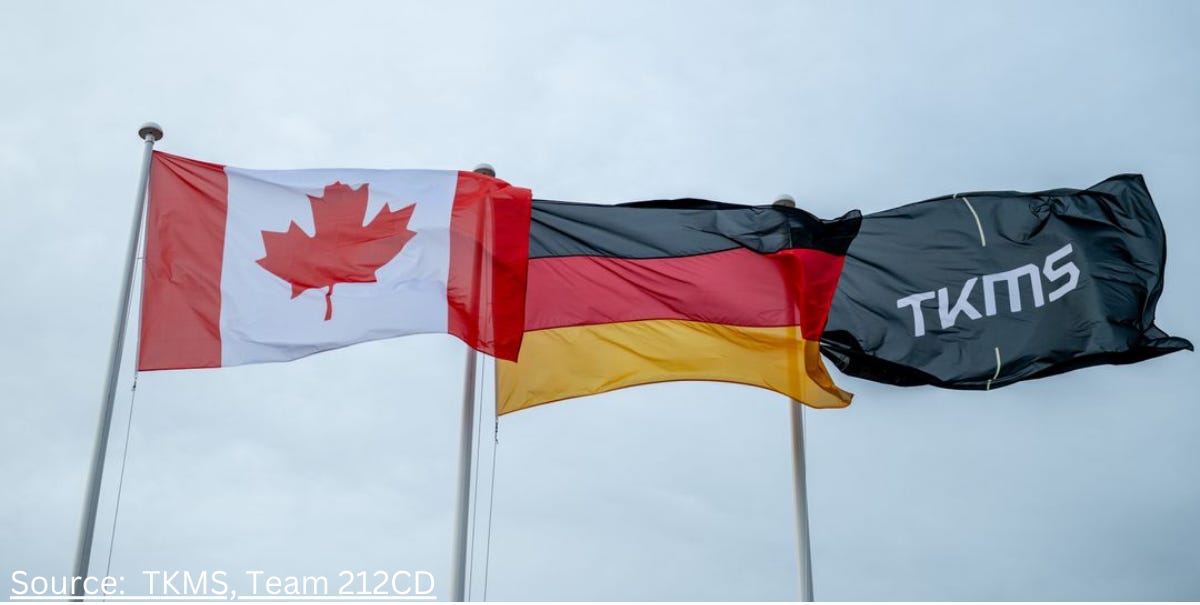
Canada used the lead-up to the summit to name ThyssenKrupp Marine Systems (TKMS) as it’s preferred supplier for the CPSP.
Here’s what Canadian SMEs need to know about the announcement.
The Stakes
Canada is shopping for up to 12 new subs, a program valued at $60 - $100B over the 40yr lifecycle.
2 contenders remained: Germany’s ThyssenKrupp Marine Systems (TKMS) with the Type 212CD, already in production for Germany and Norway, and South Korea’s Hanwha Ocean with the KSS-III Batch II, now in service with the Republic of Korea Navy.
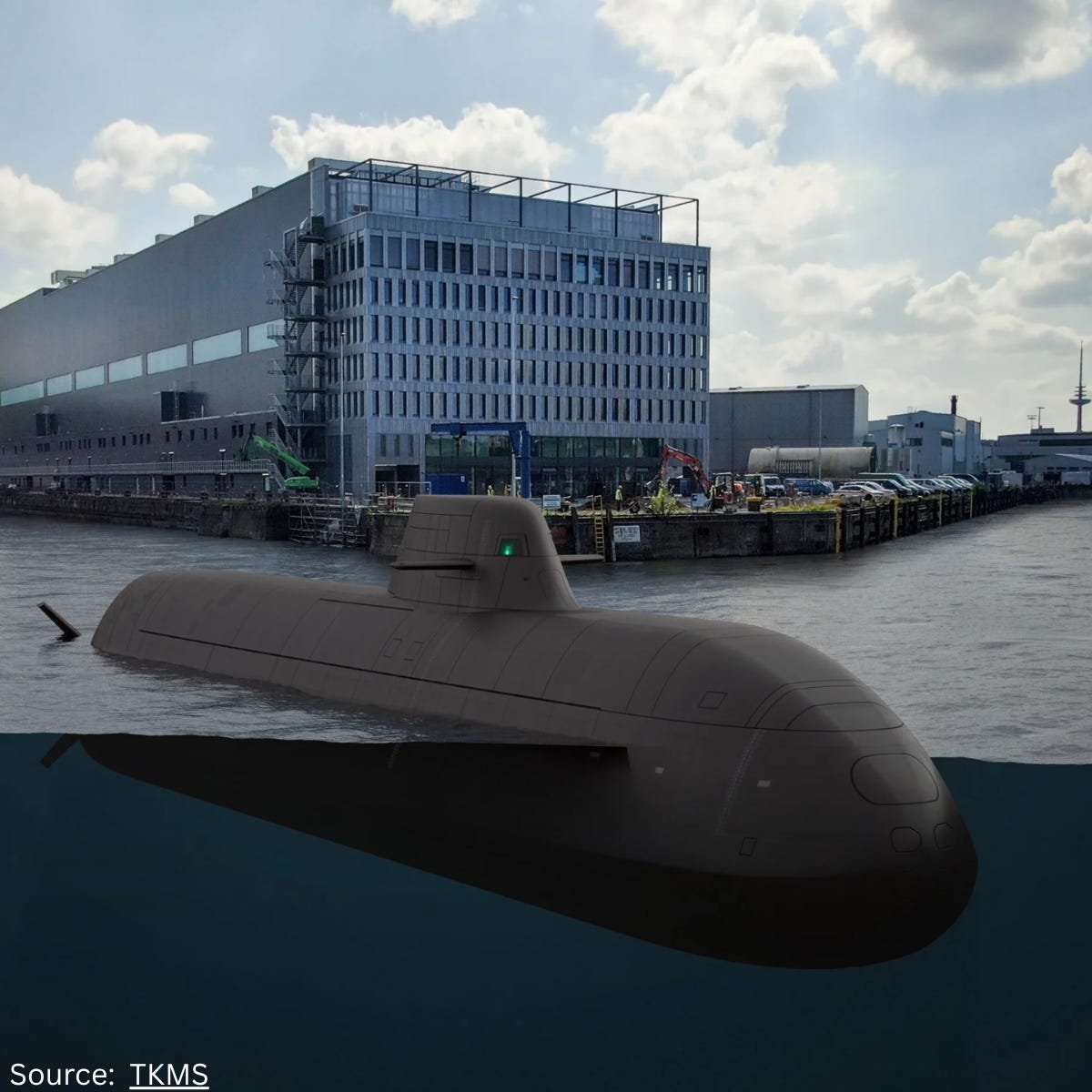
Both platforms meet the High-Level Mandatory Requirements set out by the Navy. The real question: which partnership best advances Canada’s industrial ambitions and reduces reliance on Washington?
TKMS’s Compelling Case
TKMS brings 185 yrs of naval shipbuilding and a €20.6B order backlog.
(It’s not alone - European defence primes have accumulated considerable order backlogs). TKMS operates the world’s busiest conventional submarine production line.
The 212CD, co-developed with Norway through a €5.5B program, gives Canada a direct entry into an active production queue.
TKMS CEO Oliver Burkhard made it clear: the winning bid must build an ecosystem rather than just deliver submarines.
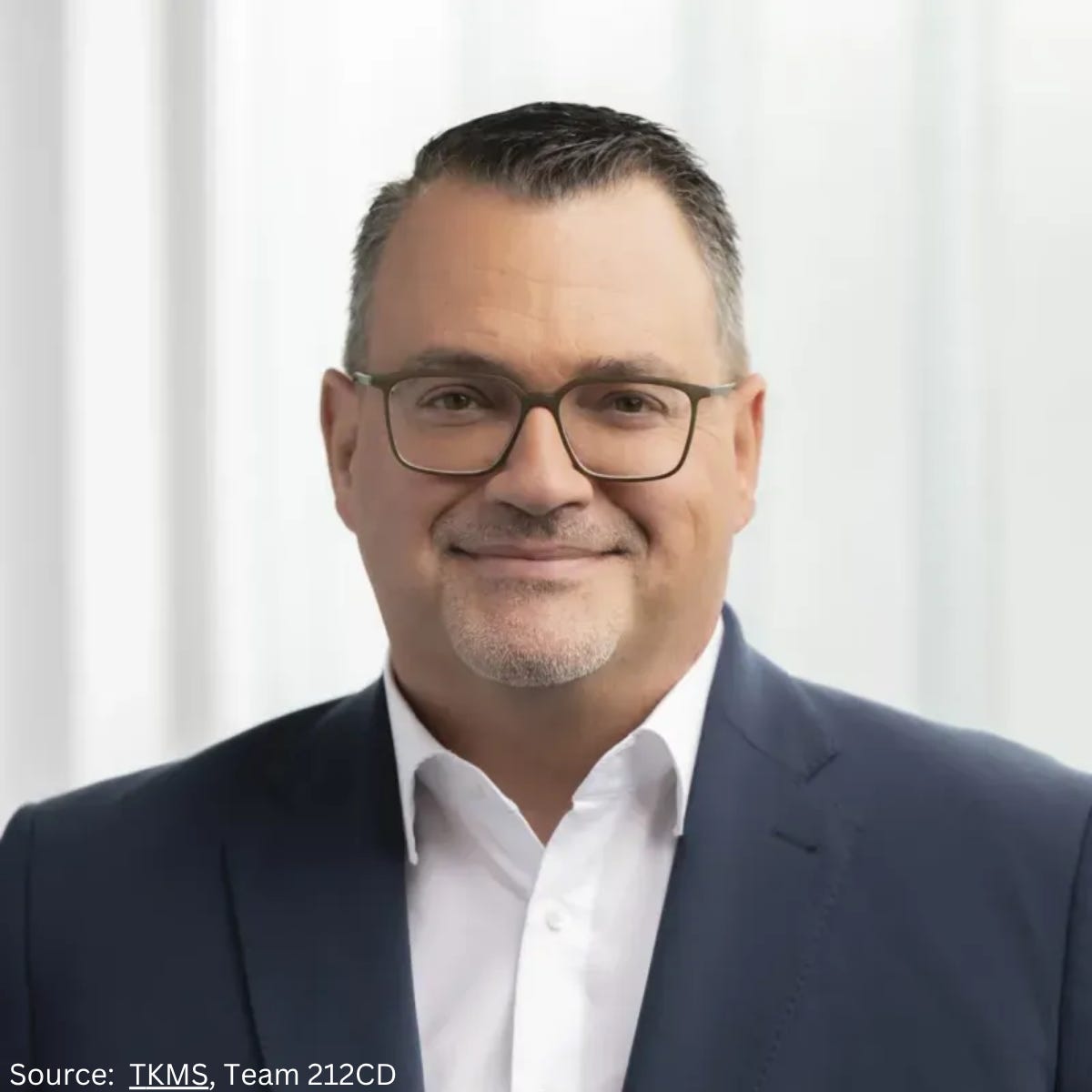
He points to energy, mining, AI, steel, and battery production as areas where Canadian and German industry can create real value together.
The recent G7 Summit also showed that Europe is paying attention to Canada in these domains. Canada also signed a Joint Declaration of Intent to cooperate with Germany on critical minerals back in Aug. 2025.
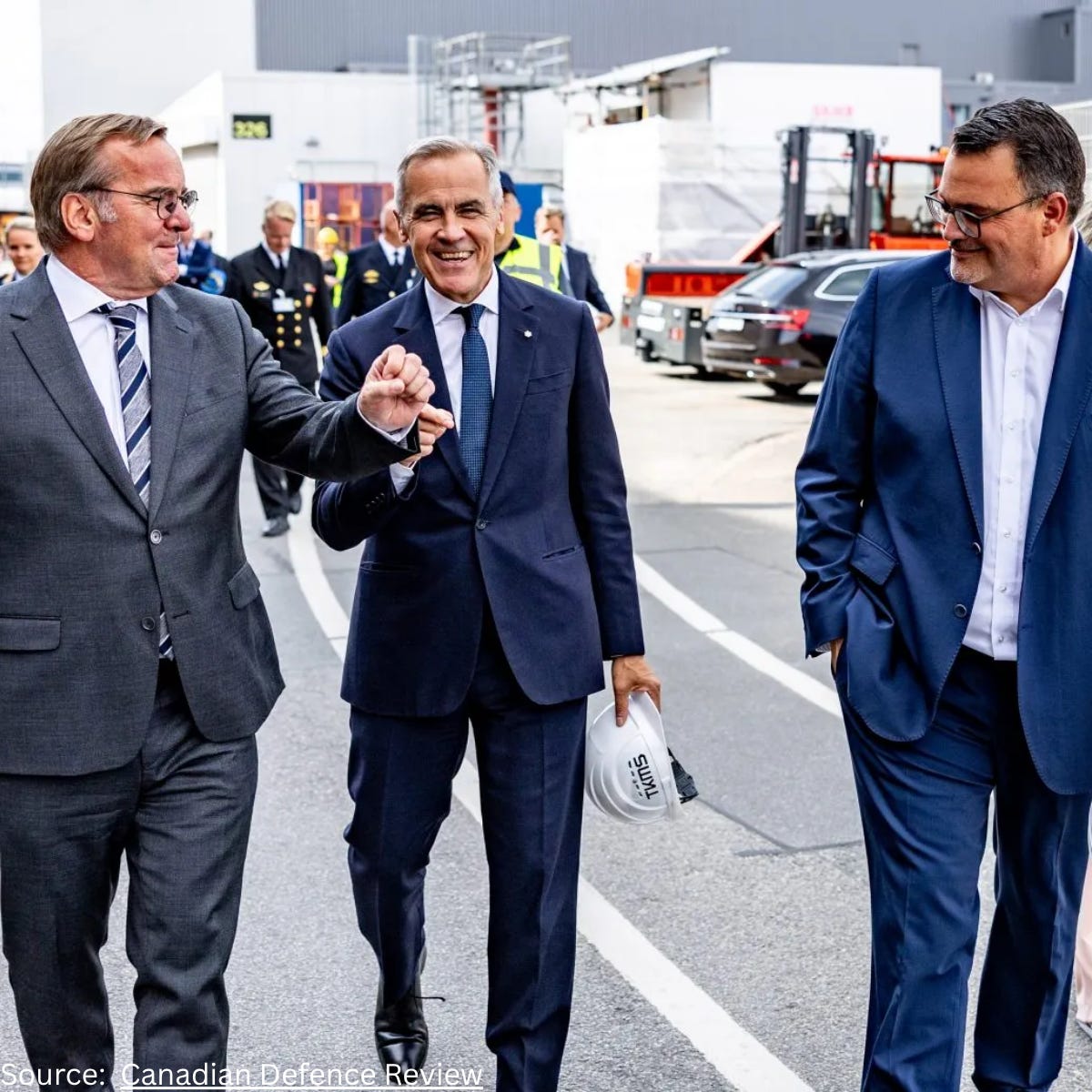
Canada’s participation in the EU’s $244B SAFE program is already in place (with the first Canadian SAFE contract awarded?). A TKMS win would deepen those ties and open European defence markets to Canadian suppliers for the long term.
TKMS also pledged $160B in economic activity, 650K+ jobs, and $86B in GDP growth over the program’s lifespan.
On the government side, their bid promises German investments in critical minerals and LNG extraction in Churchill, MB, plus a carbon capture facility in Alberta.
The Canadian Industry Behind Team 212CD
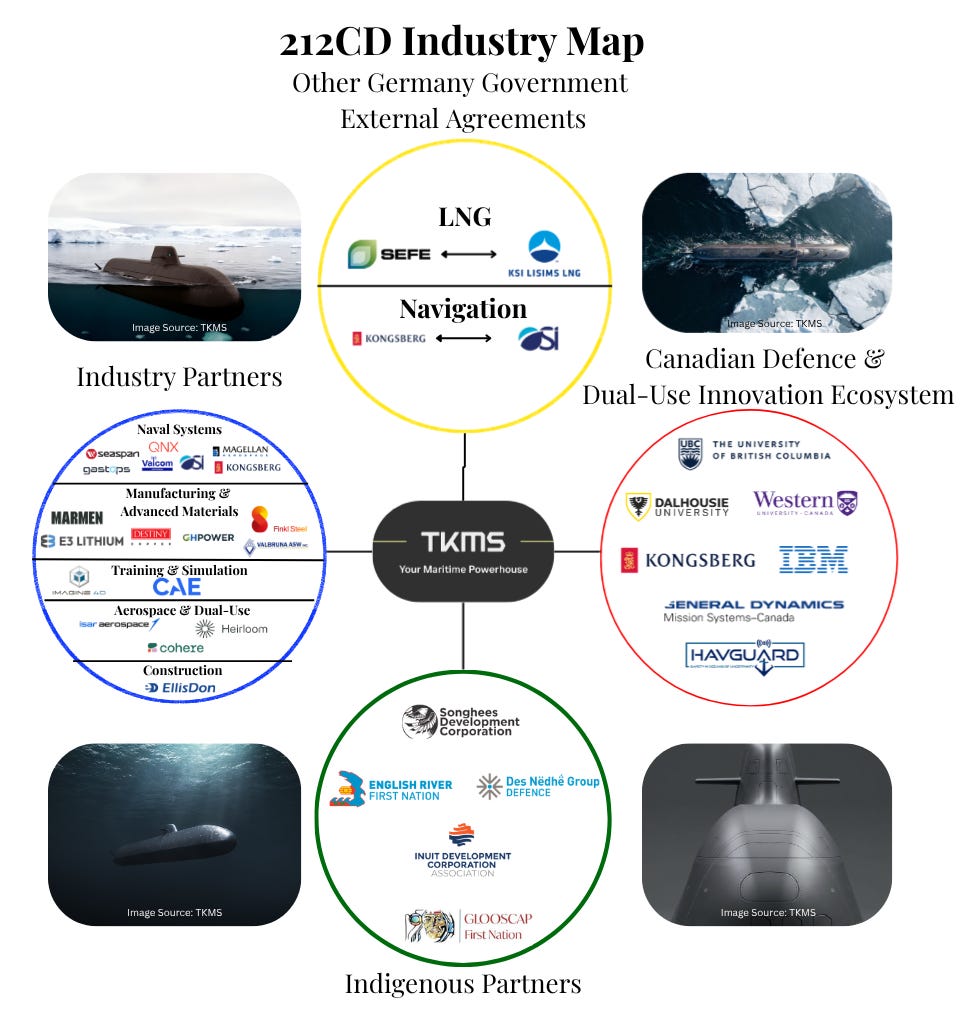
TKMS has built a strong Canadian industrial coalition for its bid.
A notable partner in its bid is Cohere, which signed a Teaming Agreement to Drive AI-Enabled Innovation for the CPSP. Both firms will evaluate how advanced language and data models can optimize decision-making workflows, manage onboard intelligence, enhance training platforms, and fortify naval interface security.
Here are a few other key partners:
CAE: Training, simulation, and operational readiness systems for CPSP crews.
Seaspan Shipyards: Leads the domestic sustainment enterprise and Maintenance, Repair, and Overhaul capacity on the West Coast.
EllisDon: Designs and constructs the 212CD’s specialized training facilities to Canadian regulatory standards.
Marmen: Manufactures submarine hull sections and complex assemblies, embedding Quebec’s precision manufacturing directly into the production program.
General Dynamics Mission Systems Canada: TKMS’s partner on Project Arctic Sentinel, a sovereign underwater surveillance capability for Canada’s North.
Magellan Aerospace: Leads heavyweight torpedo production and in-service support.
Gastops: Provides submarine automation system sustainment and leads a Canadian Centre of Excellence for lifecycle support and capability evolution.
Destiny Copper: Advances the critical mineral supply chain, converting waste streams into high-purity copper powder for defence and aerospace industries.
Valbruna ASW: Supplies the non-magnetic submarine steel that makes the 212CD nearly invisible to magnetic anomaly detectors. TKMS has already placed a 70-ton pre-contract order and is fast-tracking Valbruna’s German WIWeB certification. This signals TKMS is moving ahead of the competition.
Finkl Steel - Sorel: Strategic materials partner for the CPSP program.
GH Power: Turns recycled and waste metals into hydrogen, thermal energy, and metal oxides. Will assess how low-carbon energy and advanced materials technologies can drive the next wave of industrial and manufacturing growth in Canada.
The firm also spearheaded the Canadian Defence & Dual-Use Innovation Ecosystem: a new, homegrown network which links Canada’s research power to real-world maritime defence and dual-use tech that can compete globally. This is on top of 5 cooperation agreements with Indigenous organizations.
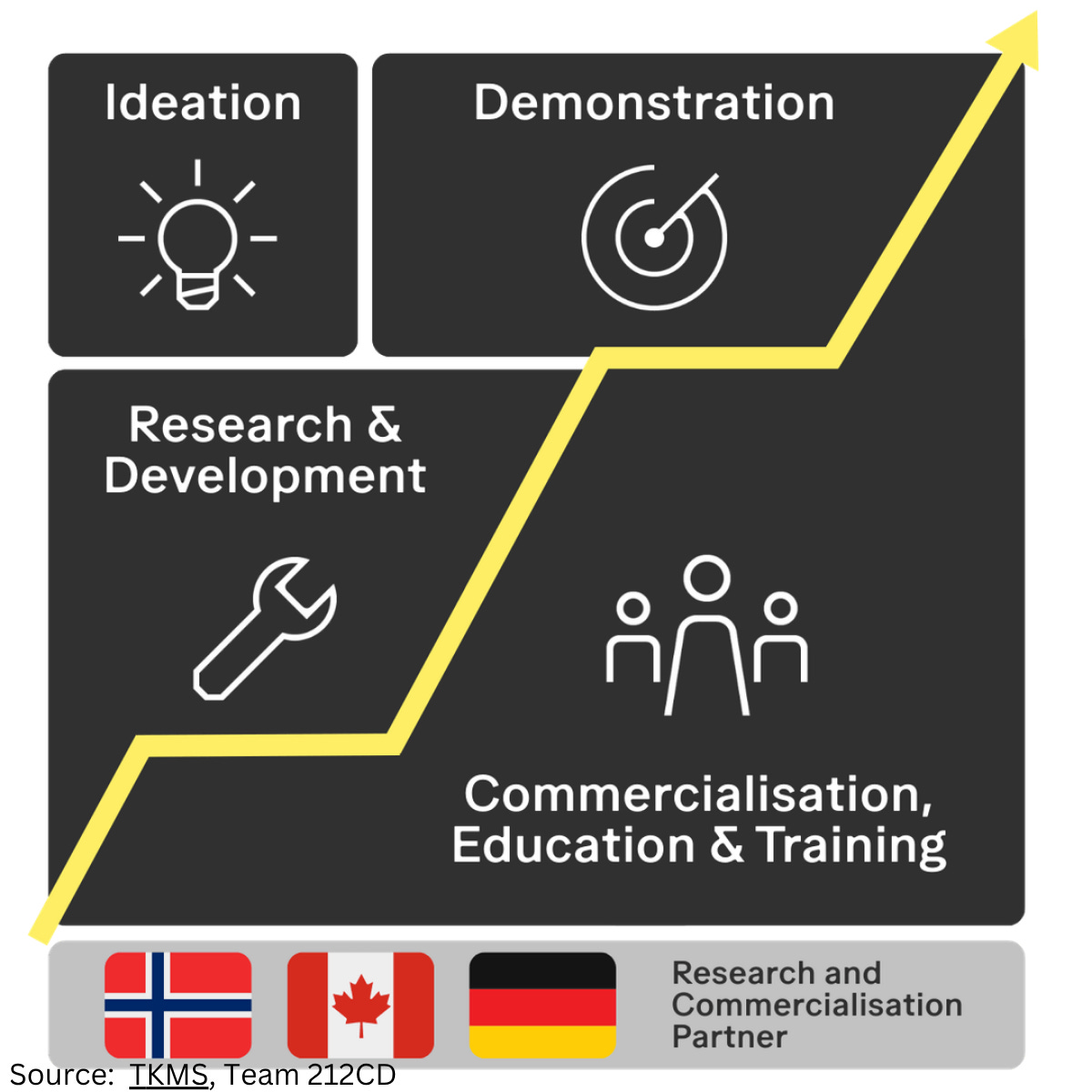
The strategy behind the CDDUIE? Keep a finger on the pulse and co-generate IP.
Beyond the MOUs, Canada’s energy and defence sectors just landed a series of agreements set to boost Canadian defence industry capacity and supply chain integration such as:
LNG:
B2G:
There was also the well timed mega-deal with Lockheed Martin Canada and Germany.
Navigation Systems:
Kongsberg and OSI Maritime Systems signed an MOU to join forces on navigation solutions. OSI’s navigation tech will plug directly into Kongsberg’s supply chains and the ORCCA Combat System to support CPSP.
Some agreements tie into CPSP more closely than others, but each one matters. We’ll only reach higher defence production capacity if the whole sector moves together.
For a full picture of the 212CD ecosystem, check out this industry map:
Political and Industry Implications
A TKMS contract means Canada aligns with Atlantic partners. Ottawa will secure a trilateral production relationship with Germany and Norway, hone its Arctic technology, strengthen its SAFE participation, and give Canadian industry a direct, long term two-way path into Europe’s growing defence market.
TKMS will also bring Canada into its Submarine Cooperation Network, which means manufacturing and integration work beyond CPSP.
Supply chain integration is one of several obstacles Canadian SMEs in Europe face (you can read more about it in 5 defence industry issues Canada faces in 2026). The 212CD would be a strong gateway into an often confusing and bureaucratic market.
A Hanwha selection would have signaled an Indo-Pacific pivot, a potentially earlier delivery timeline, and a move away from traditional European partners. For SMEs, this means joining a Korean-led supply chain with faster production but less direct access to European markets.
Critical components still need to be hashed out.
A government equity stake, IP co-ownership, or a domestic producer that progressively takes on more of the program. This deal is a prime moment to put Canadian capacity front and center (see Dear Canada, Don’t Buy a Submarine…)
For SMEs, the submarine giant Canada selects will create a production ecosystem that requires local partners and suppliers.
Twelve submarines, one message: Canada is choosing Europe.
P.S. 1,364 of you are shaping transatlantic relations with www.canadaxeurope.com.
Thanks for being a part of it!
I do not want to tied to Europe.
Nobody asked me.
It is my tax dollars.
650,000 jobs over the life time. Is 16,250 jobs a year for 40 years. Anyone else wanna call bullshit? Any breakdown available?