


Two years & three NATO summits after Justin Trudeau first promised new subs under duress, Mark Carney is poised to name Canada’s preferred bidder for the Canadian Patrol Submarine Project (CPSP) around the Ankara summit.
Here’s the arc before the announcement lands.
Because the trajectory says as much about how Canada now thinks about defence procurement - as the choice between Germany & Korea.
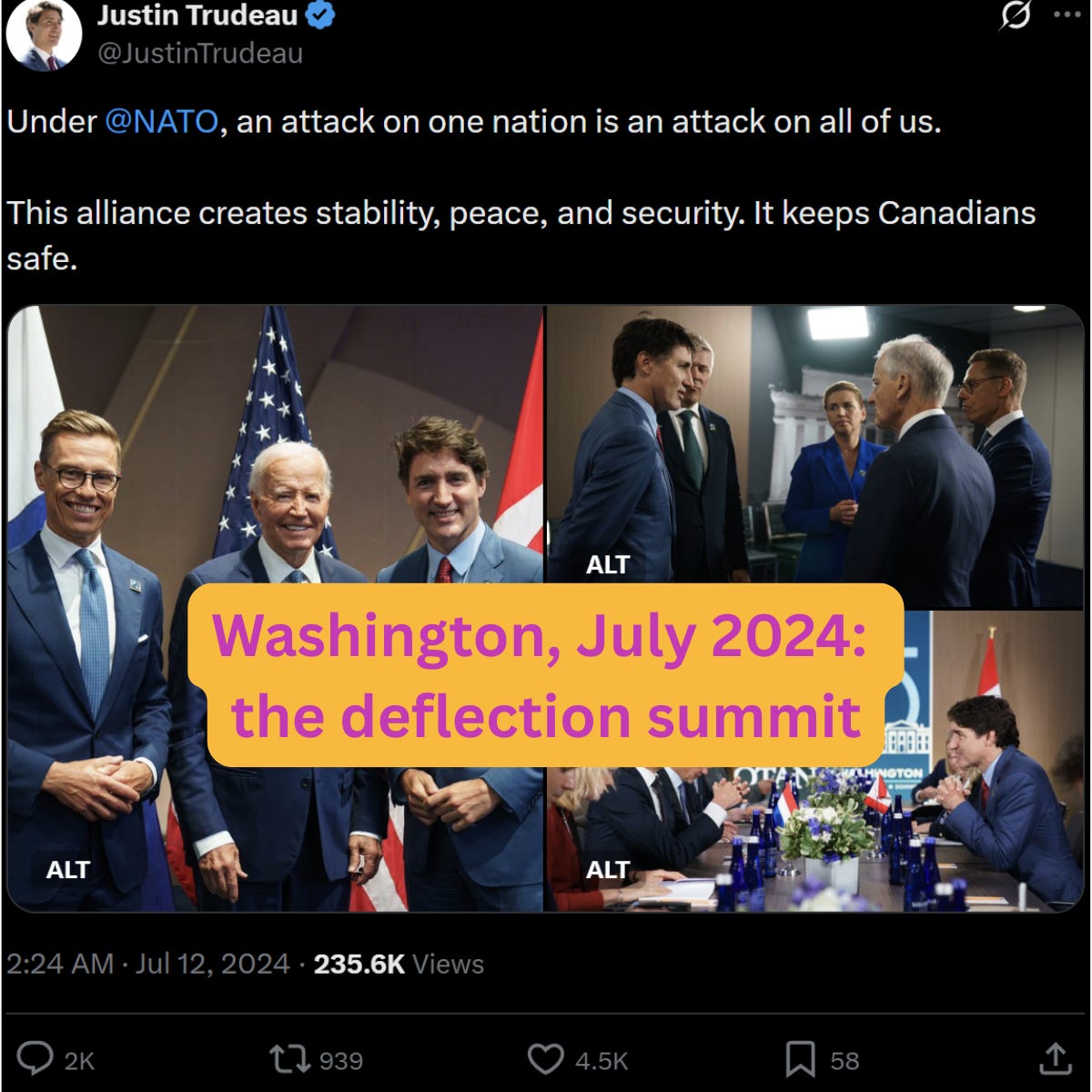
Washington, July 2024: the deflection summit
Trudeau’s submarine pledge was born of pressure, not policy.
Facing criticism over Canada’s chronic underspending, Trudeau and then-Defence Minister Bill Blair (now ambassador to the United Kingdom) announced the sub commitment on the margins of the Washington summit.
It was bundled with a Ukraine aid package and F-16 pilot training as NATO leaders gathered for the Alliance’s 75th.
It had the shape of a government buying time rather than building capability:
· commitment to procurement,
· 2032 deadline for the 2% of GDP target,
· Request for Information (RFI) issued in September seeking up to 12 under-ice capable boats,
· contract award 2028,
· 1st delivery targeted 2035.
No budget. A pledge sized to survive a press cycle.
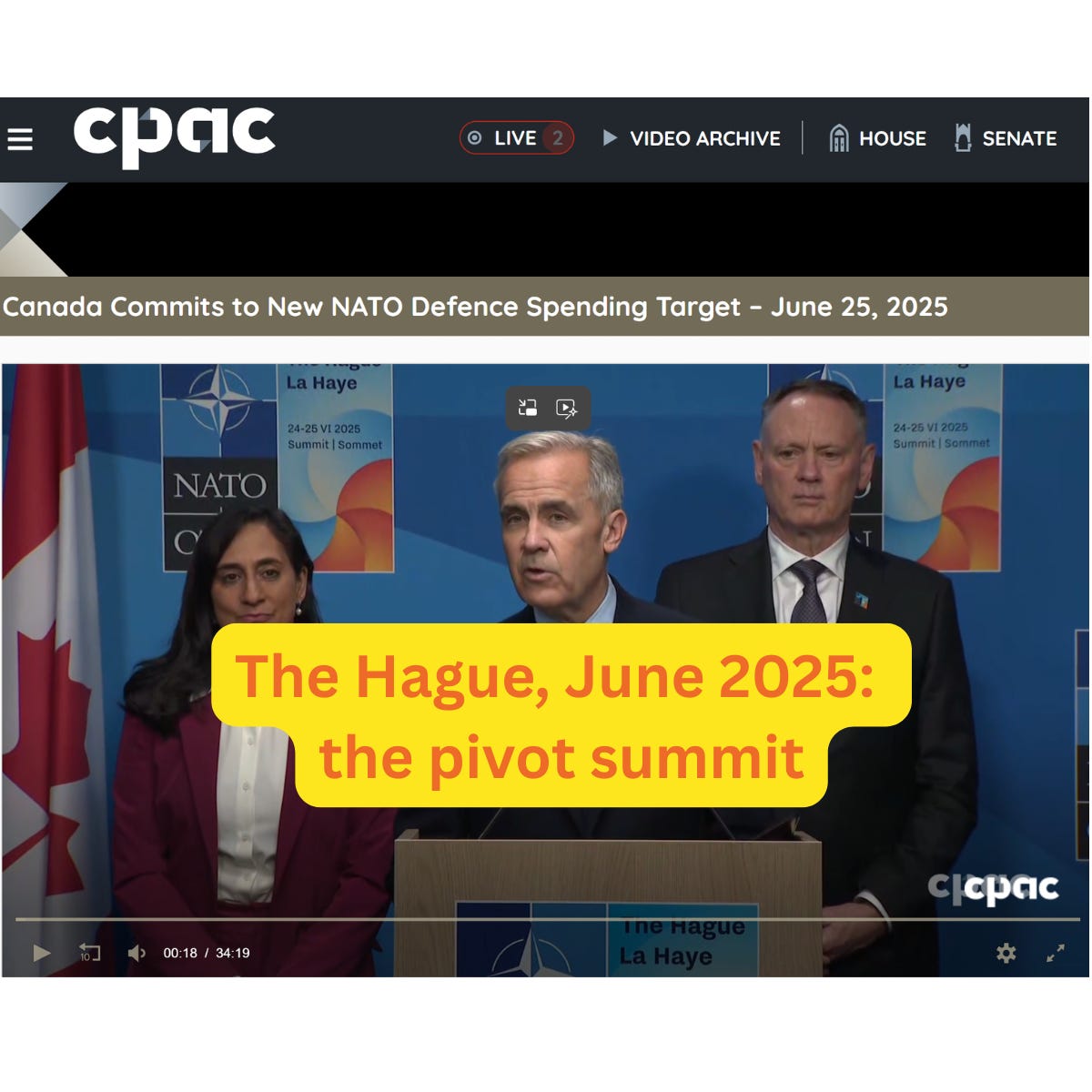
The Hague, June 2025: the pivot
Carney’s first NATO summit as prime minister is where Canada’s commitment shifted.
He told reporters he had discussed the possible purchase of European-made submarines with allies.
This is the summit where the submarine file stopped being a spending-target prop and started being treated (in Ottawa) as an industrial strategy question.
And the architecture took shape for what would become the Defence Investment Agency and Canada’s Defence Industrial Strategy.
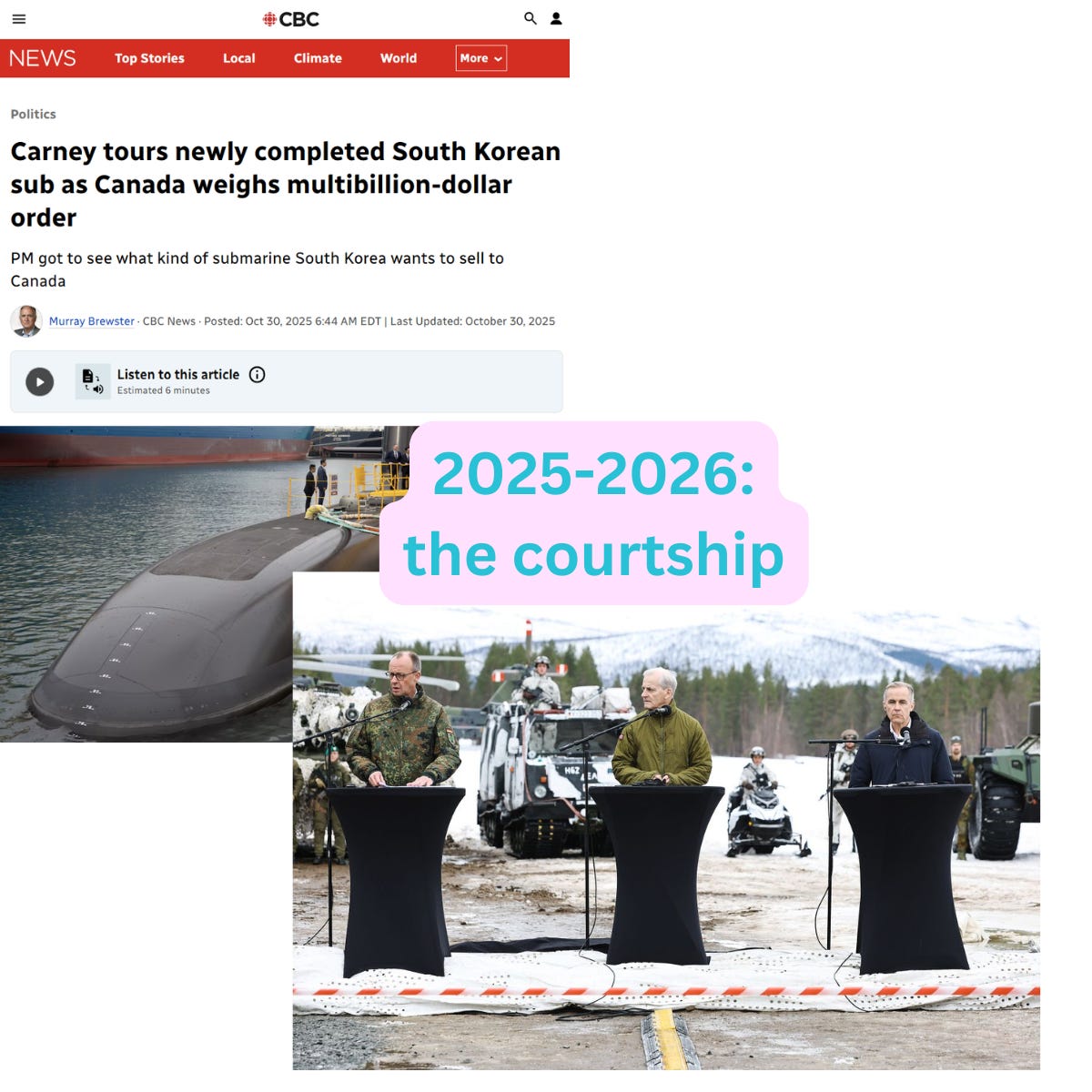
Germany and Korea, 2025-2026: the courtship
What followed The Hague was a remarkably personal procurement process. A decision understood in Ottawa as a 40-yr industrial partnership rather than a hardware purchase.
In Oct 2025, Carney toured the Hanwha Ocean shipyard on Geoje alongside Defence Minister David McGuinty, South Korea’s PM Kim Min-seok, and Hanwha Group Vice-Chair.
The previous Aug, Carney visited ThyssenKrupp Marine Systems’ submarine building facility in Kiel, touring a 212A-class boat under maintenance with TKMS CEO Oliver Burkhardt.
Few Canadian defence procurements have received this degree of head-of-state choreography with both bidders simultaneously.
A signal that Ottawa understood early on that this was no longer a conventional tender.
The competition narrowed to two bidders in Aug 2025.
Industrial linkage to the broader trade file has been explicit throughout.
Ottawa has made clear it wants economic benefits tied to the industries hit hardest by the U.S. tariff war - steel, aluminum, autos, and forestry.
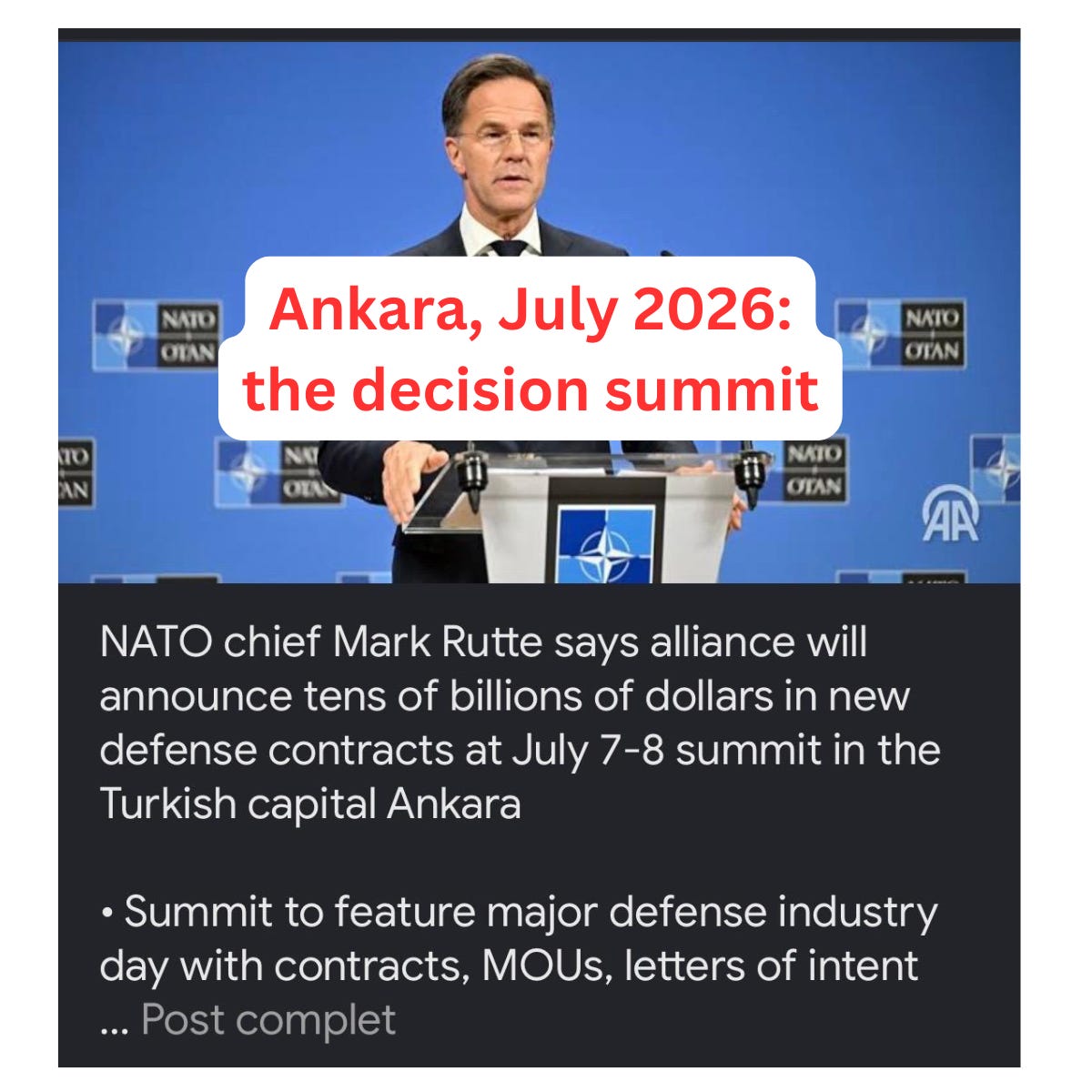
Ankara, July 7-8, 2026: the decision
Carney previously said a decision would come before the end of June.
CTV News now indicate the announcement will be delayed by a few days likely land around Ankara.
The distinction matters for how this gets read in Brussels, Seoul and Berlin.
This is a Canadian industrial decision carried into the Alliance room, not a decision staged for the Alliance.
The frame
Two years, three summits, two prime ministers, one file.
Washington bought political cover under duress.
The Hague bought latitude and reframed the file as industrial strategy rather than spending-target arithmetic.
And the Ankara bidder announcement (whenever exactly it lands) is the moment 2 years of NATO-summit signalling converts into Canada’s first real test: whether it can treat a major defence acquisition as a sovereign industrial decision rather than a procurement exercise.
Philippe Lagassé has framed it precisely: Canada is not buying 12 subs, it is choosing a strategic partner for the next 40 to 50 years…
Whether Ottawa ends up with Germany or Korea, the test from here is whether this newsletter’s argument don’t buy a submarine, buy a submarine company gets reflected in the fine print of whatever contract eventually follows.
A preferred-bidder announcement is not a signed deal.
Expect Ottawa to treat the choice as provisional pending final contract negotiations, preserving leverage to extract binding commitments on delivery, tech transfer, and domestic industrial investment.
That negotiation is the real outcome.
Let’s see if Canada floats or sinks in Ankara next week.
P.S. 1,350 of you are shaping transatlantic relations with www.canadaxeurope.com.
Thanks for being a part of it!
Thanks for a great article. I wonder if a TKMS decision looms due to proximity to the NATO summit.
Good summary. However, the Prime Minister is head of government. King Charles is Canada's head of state (and in His absence, the Governor General stands in).