


Canada’s defence sector faces innumerable challenges and opportunities in 2026.
One thing is for sure: money is no longer the problem.
Here are 5 defence industry trends to watch for over the next year:
1. Reform reality meets reform fatigue
Without clear lines of responsibility (and the resources to power it), Canada’s Defence Investment Agency has turned a three-headed beast into four. The modern-day Hydra of defence procurement.
However, the risk in 2026 isn’t a lack of ideas; it is reform fatigue. Changing tires on a car in motion is hard.
The Defence Industrial Strategy has been rumoured to be imminent on three separate occasions. So many announcements have been made. At this point, it might be met with a yawn.
Incremental and wholesale changes may not meaningfully shorten timelines, enable new emerging technology, align industrial policy with urgent capability gaps, or give meaningful routes-to-market for SMBs.
Will 2026 be where reform meets fatigue?
2. Buy America is just getting started
Message to Canada’s industry: Buy America is a structural shift.
With Canada-United States-Mexico Agreement (CUSMA) entering formal negotiation in 2026, US domestic-content rules, waivers, and national-security carve-outs are no longer exceptions. Reshoring and localization will be top of mind and defence (typically carved out of free trade agreements) might be dragged into the middle of it (e.g. F35s).
Erin O’Toole has a masterful piece contrasting the Carney and Trudeau eras, trade uncertainty and the limitations of the Buy Canadian response.
Will 2026 put an end to the trade war?
3. The ICE Pact will break ice
The historic agreement kicks off the rebuilding of American icebreaker fleets and was a major win for Canada’s defence sector (and multilateralism) in 2025.
With geopolitics reshaping supply chains, the ICE Pact offers a vision of what actually works in this new reality, with Canadian firms (partnered with European ones) at the centre of it all.
If The Icebreaker is right, the Arctic will be occupied.
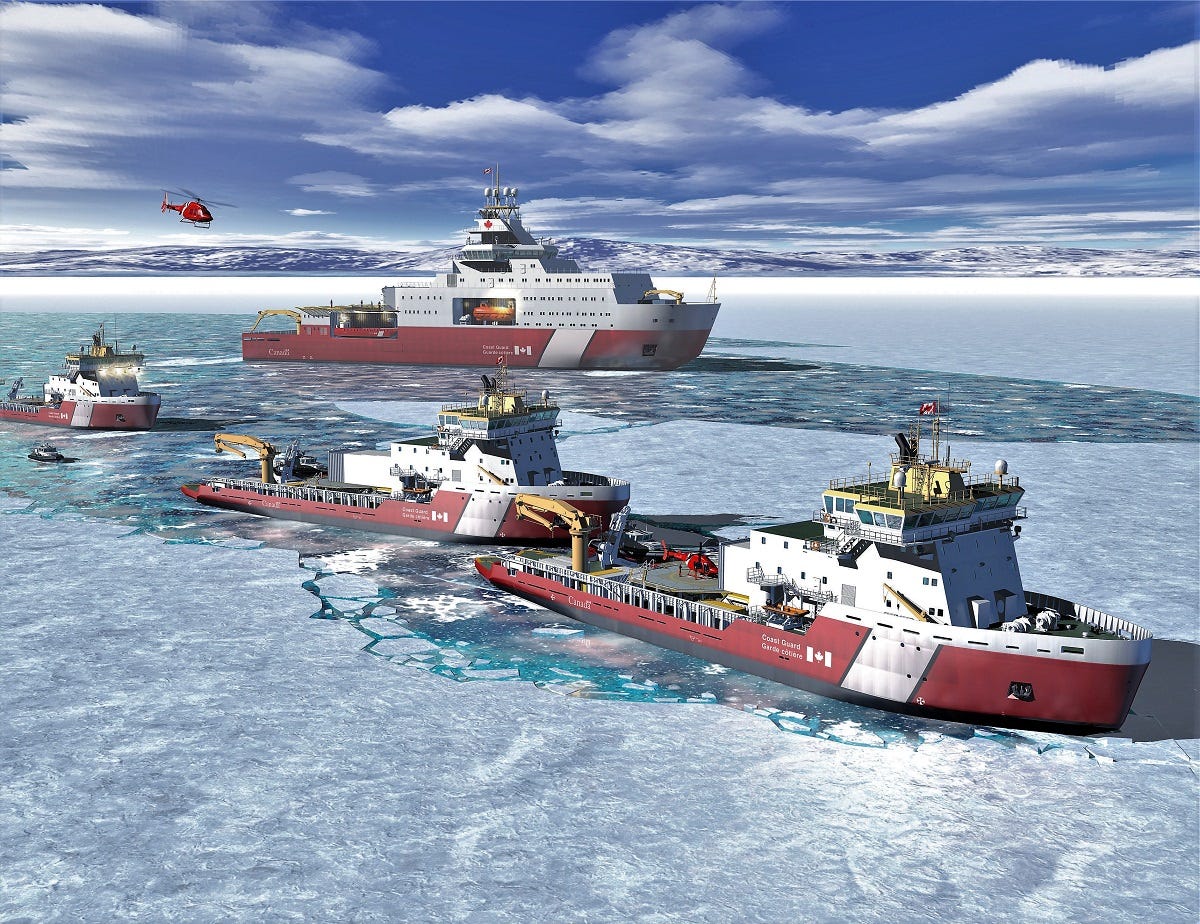
In 2026, will capability, speed, partnerships and industrial collaboration help Canada break the ice forming along the 49th parallel?
4. Canada’s pivot to Europe will take epic proportions.
Europe is becoming a core pillar of Canada’s defence, industrial and technology strategy.
2025 was a monumental year for Canada-Europe relations. Prime Minister Mark Carney’s first visit abroad was to France (followed by the UK). King Charles delivered the speech from the throne for the first time in nearly 50 years. Canadian Cabinet ministers have been visiting Western Europe on a nearly weekly basis. Other examples:
State visits, ministerial travel, and defence diplomacy with Finland, France, Germany, Norway, Poland, Sweden, and the UK became industrial positioning exercises.
For polite but docile Canada and bureaucratic Europe, the heading of epic might be a little bit of a stretch (not as much as joining the EU), but:
Look for Canadian trade missions to multiply.
Look for Canada to position itself as a reliable NATO ally, a staunch and committed supporter of Ukraine and a serious Arctic nation. All of which places Europe at center stage.
Finally, Canada is the lead nation at Poland’s MSPO (the second-largest defence trade show in Europe), where it has a unique opportunity to strut its stuff.
Will 2026 be epic for the Canada-Europe relationship?
5. Canada will let a submarine down.
The Canadian Patrol Submarine Project down-selected to two international shipbuilders, Germany’s TKMS and South Korea‘s Hanwha.
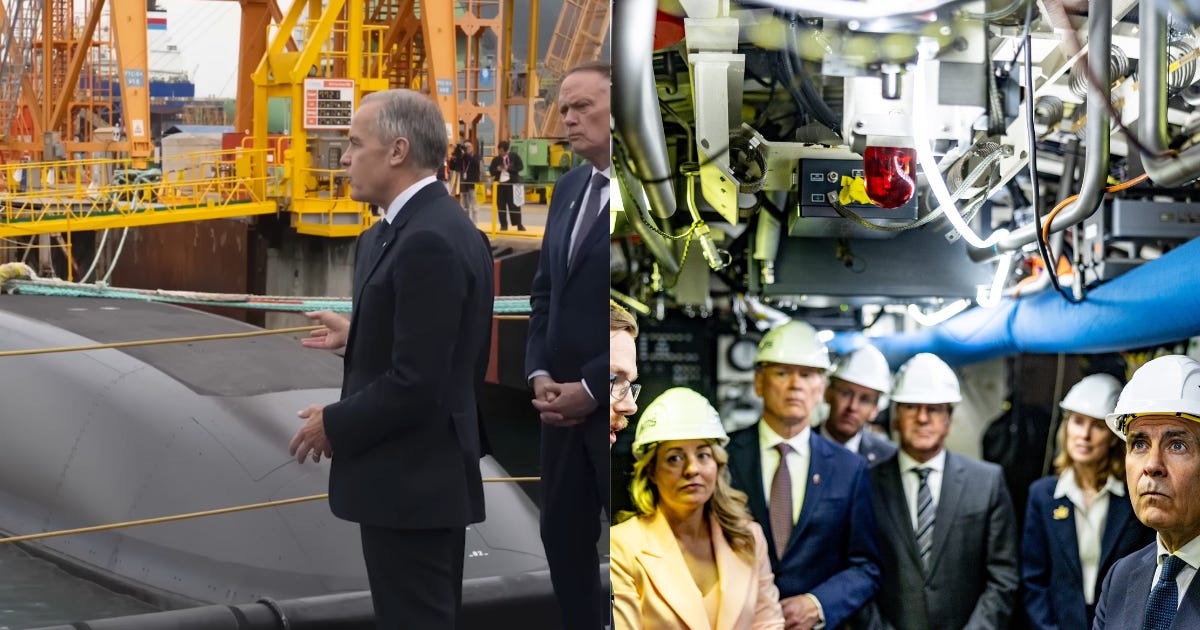
Both bidders have been courting industry and government with formidable teaming agreements. The competition has led to a slew of diplomatic initiatives between Canada-Germany and Canada-South Korea, in addition to business deals.
With CPSP bidder’s instructions out and due in March, the multi-billion dollar generational project is in the final stretch. Philippe Lagassé says expect a tentative winner to be declared to keep the pressure on (and position Canada favourably for further industrial concessions) until the ink is dry on a new contract.
The submarine honeymoon phase will come to an end in 2026, and Canada will make a difficult choice.
2026 is the year of the horse: in the current geopolitical context, le cheval canadien will need all the iron it can muster.
I understand your concern regarding the Defence Investment Agency. Canada’s middling “ship” has been blissfully meandering on and off course for decades. Let’s hope the events of last year will get us to set course and proceed all ahead full. I am hopeful.
Spot on about reform fatigue. The Defence Investment Agency, launched by PM Carney in October 2025, aims to cut red tape by centralizing procurement under Public Services and Procurement Canada. Yet its first projects—like submarines and Arctic radar—were only tabled in Parliament by December. Will clearer authorities for DIA actually speed things up, or just add another layer?