


Yesterday, the Government of Canada’s new Buy Canadian Policy officially came into force (effective December 16, 2025). This significant shift in federal procurement prioritizes Canadian goods, services, and suppliers for major infrastructure, defence, and government projects - aiming to strengthen domestic industries, support Canadian workers, and enhance economic resilience amid rising global trade tensions.

The Act prioritizes Canadian Suppliers and Canadian Content in for contracts valued at over $25M, and will be extended to contracts valued at $5M by Spring 2026. It will use a point-based system.
It also includes a commitment that:
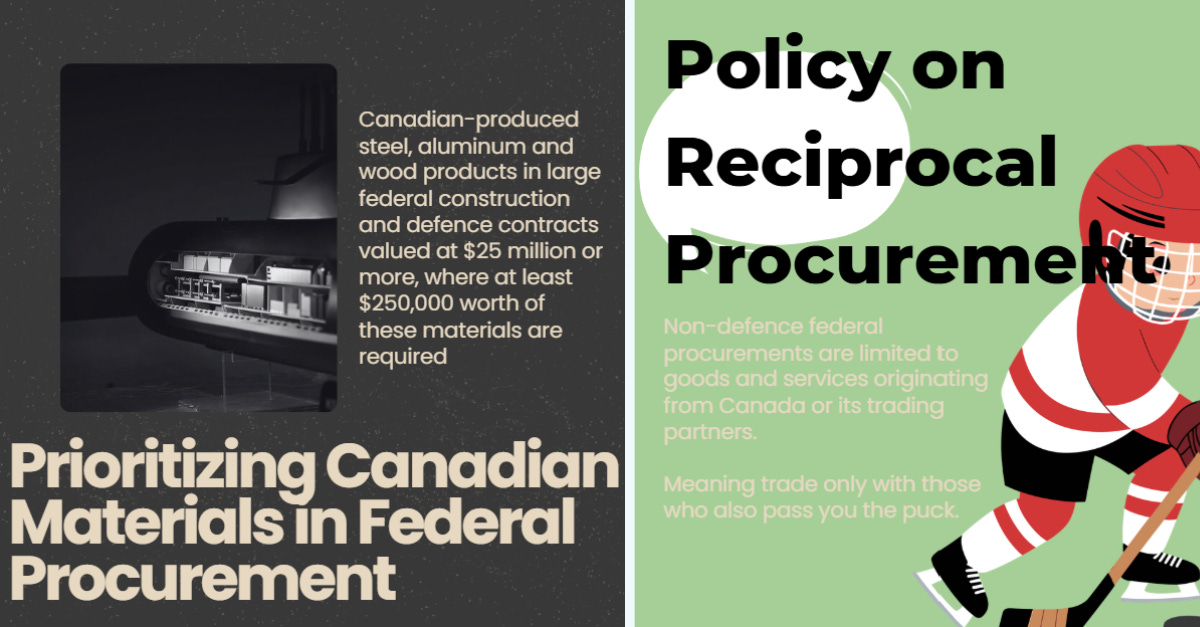
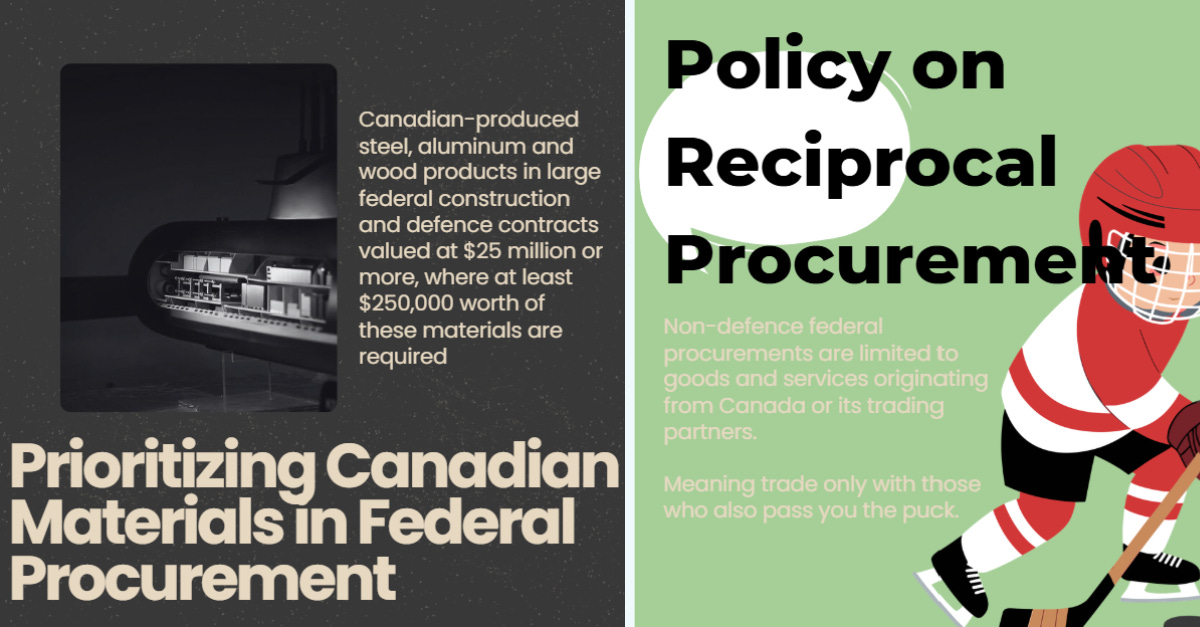
requires the use of Canadian-produced steel, aluminum and wood products in large federal construction and defence contracts valued at $25 million or more, where at least $250,000 worth of these materials are required
fully implement the Policy on Reciprocal Procurement in spring 2026
According to the framework, Departments and agencies must:
- Integrate applicable Canadian prioritization requirements into procurement planning, including Statements of Work, technical specifications, and evaluation criteria.
As well committed to an upcoming Small Medium sized Business refresh with set-asides.

Can Canada embrace protectionism but thread the trade diversification needle?
At the same time, Canada is actively pursuing closer economic rapprochement with Europe such as:
The first Canada-EU Digital Partnership Council meeting,
Ongoing CETA committee discussions,
Investing big in the European Space Agency,
Entering Security Action for Europe (SAFE).
As Canada sharpens its focus on domestic procurement and industrial resilience, Europe has done the same through SAFE, EDF, ReArm Europe, and national buy-local frameworks.
Prioritizing Domestic Resiliency
In some ways, Canada was already accused of prioritizing local manufacturing, so this gives a fair, open and transparent mechanism for procurement officers to use.
It’s also another step in a long line of other internal industrial policies such as the Canadian Content Policy, the Industrial and Technological Benefits policy (which applies to Defence Procurement), a Mandatory minimum 5% Indigenous procurement target and other recent attempts such as the Canadian Value Added approach.
Buy Canadian can (hopefully) be a filter, not a wall.
Speaking of walls, let’s not forget it was inspired by the Buy American Act, which shuts out Canadian firms from similar government procurements south of the border.
Two things are certain, it:
(1) does muddy the trade diversification narrative; and
(2) adds another layer of complexity to any federal procurement.
This is canadaxeurope, a mash-up of what really matters in defence, trade and business across the Atlantic. Containing practical insights, field notes, connections and headlines.
I understand your irritation with how this looks. But I find the language to be extremely flexible:
"This policy gives a clear and measurable advantage to companies with a real footprint in Canada: businesses that invest here, employ Canadians and contribute to local economies. Federal procurements will prioritize bids that feature greater Canadian content, which includes manufacturing, research and development, and other economic activities that occur domestically." Take this together with the very high priority put on "speed" when it comes to procurement goals as well as a new agency (DIA) with sole authority, and I would argue that this will work well with diversification. But we shall see. (and I am still waiting for confirmation of the percentage procurement cap under SAFE)
Big headline, but let’s look at the track record. The Auditor General’s 2024 report revealed that under the previous "Buy Canadian" framework (ITBs), requirements were actually waived or reduced for 1 in 6 major contracts.
The mechanism is tricky: often, foreign winners satisfy these rules via "indirect" offsets—like funding a university lab—rather than building sovereign manufacturing capacity. Unless yesterday’s policy explicitly closes those loopholes, we might just be rebranding the same flexible math.