


In the wake of yesterday’s big announcement selecting TKMS as the preferred bidder for the Canadian Patrol Submarine Project, CanadaxEurope reached out to Mike Petric from CanadaxIndoPacific for a take on the reaction…as well as what’s next for Canada and the region.
This guest post is written by Mike Petric, Managing Director of PerceptX. PerceptX is a Canadian veteran-owned advisory firm focused on defence and aerospace. PerceptX advises governments, corporations, and investors working to build sustainable and competitive Canadian defence industrial capabilities.
Executive Summary:
In the wake of the decision on CPSP, Canada should do five things now:
Hold Germany, Norway, and TKMS to clear commitments on delivery, Arctic performance, Canadian industrial participation, IP, sustainment, training, and production integration.
Keep Korea a warm, serious strategic option (without using them as a stalking horse) if contract negotiations stall, costs move, delivery slips, or industrial commitments weaken.
Convert the Hanwha industrial campaign into a wider Canada-Korea agenda on fires, munitions, air defence, counter-UAS, autonomy, space-enabled C2, and maritime. Do this as part of broader defence industrial engagement with the region.
Use the German-Norwegian industrial footprint and growing ambition in the Indo-Pacific, including TKMS’s Singapore experience and maintenance facilities, to support Pacific serviceability and regional industrial access.
Encourage TKMS to leverage Canadian capabilities already identified through the Hanwha process where they fill gaps in the German-Norwegian offer.
Introduction
Canada has selected TKMS as the preferred supplier for the Canadian Patrol Submarine Project. Many will treat that as the end of a process. It is not. Canada still needs to negotiate a final contract, lock down delivery, finalize workshare, and make the German-Norwegian production arrangement serve Canadian interests.
Despite the obvious imperative to work with TKMS to deliver a successful submarine program, Canada must also ensure it gets the subsequent engagement with Korea and the broader Indo-pacific right. That’s why Canada should seize this file now and take a proactive rather than reactive posture toward its South Korean partners in the wake of this decision. Why?
If Canada wants to hit its defence revenue and export growth targets, it needs exports to the Indo-Pacific as well as Europe. Defence exports give Canadian firms economies of scale, production depth, and resilience between domestic procurement cycles. A focus on exportable capabilities also builds a competitive, capable and sustainable industrial base that does not depend on Canadian demand alone.
Canada also needs like-minded partners with real industrial capacity if it wants strategic autonomy. Outside Europe and NATO, South Korea, Japan, Singapore, and Australia all matter. South Korea should sit somewhere near the top of that list.
Canada should pursue direct partnerships with these countries’ defence industrial players, but it should also study how these countries have expanded their roles in the global defence industrial base. South Korea has paired domestic production programs, including KF-21, K9, K2, and naval shipbuilding, with aggressive export growth.
Canada and Korea have already built the policy machinery. Prime Minister Carney and President Lee launched negotiations on a Canada-Korea Defence Cooperation Agreement covering defence science, technology, and materiel. They also confirmed the General Security of Information Agreement is in force, identified cybersecurity as a priority, and committed both governments to a joint critical-minerals stockpiling plan by the end of 2026.
The submarine competition also built practical knowledge. Canada and Korea spent months defining what industrial cooperation could look like around a major defence program. Hanwha and Team Korea advanced roughly 75 MOUs with Canadian firms and proposed industrial cooperation across hydrogen, LNG, aerospace, crude oil, naval sustainment, and other sectors.
Canada should now do five things.
First, keep pressure on Germany and Norway.
Preferred supplier status gives TKMS the lead. It does not give TKMS a blank cheque. Canada should hold Germany and Norway to clear commitments on delivery schedule, Arctic performance, Canadian industrial participation, IP access, sustainment, training, and long-term production integration. To be certain, TKMS is a credible highly technically capable supplier and Germany is an ally. But, submarine programs are complex, political and challenging things. See France’ experience in Australia.
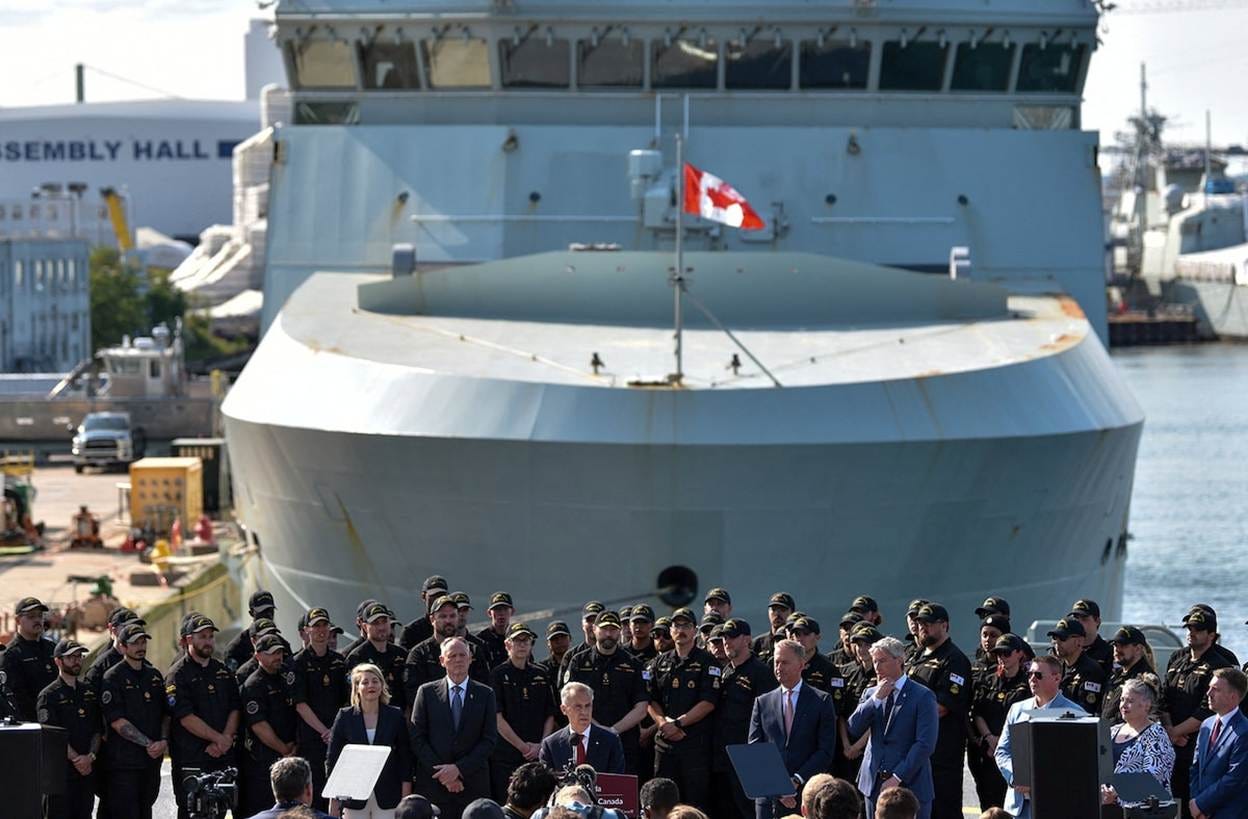
PM Carney announces TKMS as preferred partner. (Source: Reuters)
Second, encourage TKMS to use the Canadian capabilities Hanwha already helped identify.
Canada should not let capable Canadian firms sit outside the program because they attached early to the Korean campaign. If TKMS has gaps in its offering, Canada should push it to integrate Canadian firms that can fill them. The companies engaged by Hanwha have already demonstrated that they’re competitive and have something to offer.
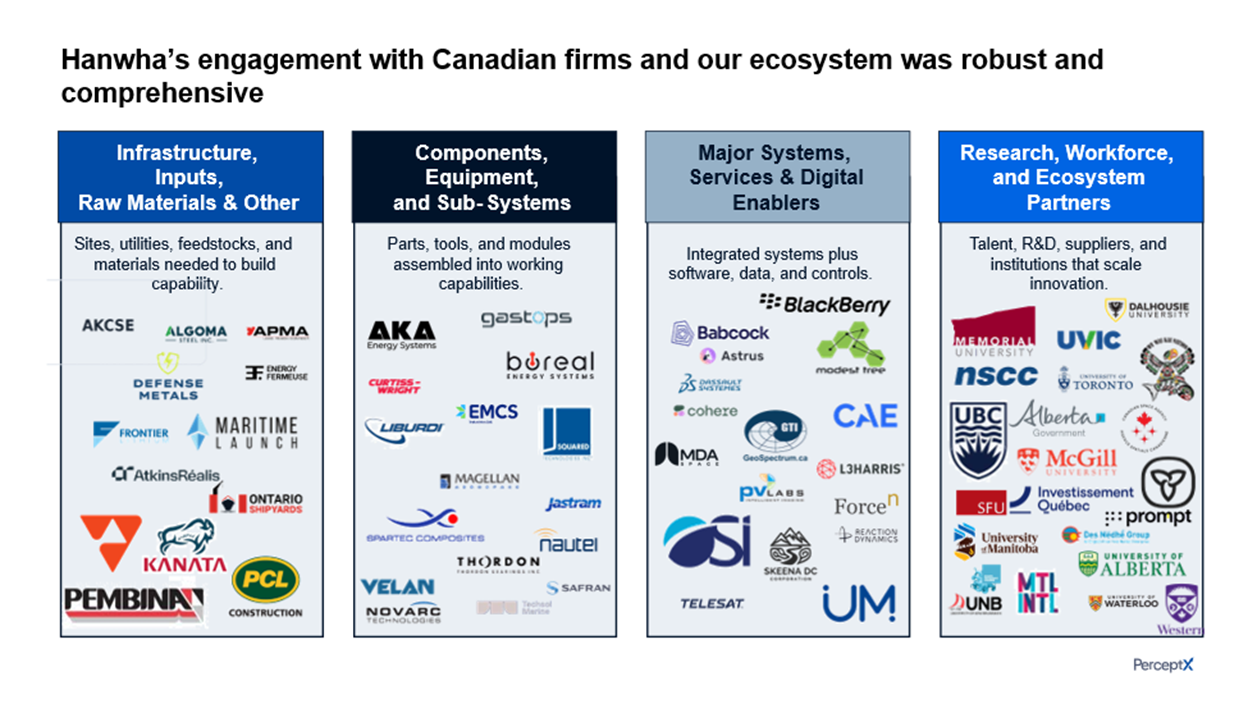
Hanwha announced MOUs, Source: PerceptX Analysis
Third, keep Korea warm as a credible fallback for submarines, but do not use them as a stalking horse.
This requires discipline. Ottawa should communicate clearly that TKMS has the lead, that Canada wants the German-Norwegian path to work, and that Korea remains strategically important if negotiations stall, costs move, delivery slips, or industrial commitments weaken.
Fourth, do not waste industrial goodwill.
The Hanwha campaign created relationships that Canada can use in other capability areas. The strongest fit is fires and munitions. Canada needs long-range precision strike, deep UAS, loitering munitions, indirect fire modernization, and more. Hanwha’s K9, K10, K77, Chunmoo, guided rockets, tactical missiles, and ammunition portfolio align with real Canadian requirements. Canadian industry can contribute sovereign capability in steel, critical minerals, AI-enabled fire control, secure communications, training, simulation, maintenance analytics, and Arctic use cases and domestic integration
Air defence and counter-UAS should come next. Canada needs GBAD, IAMD, layered CUAS detection, electronic warfare, hard-kill and soft-kill effectors, data fusion, and C2 integration. Korea has relevant capacity in radar, air defence, missiles, electronics. Canadian firms can bring sovereign capability in EO/IR, cyber, secure software, AI-enabled C2, space-enabled communications, training and simulation, and lifecycle support.
Canada should also advance work on autonomy, space-enabled C2, and maritime sensing. Canada needs air-launched effects, autonomous collaborative platforms, MUM-T, Arctic underwater awareness, uncrewed maritime systems, and persistent maritime surveillance. Korea brings scale and export markets. Canada brings key sovereign capabilities in AI, specialized autonomous system capabilities, synthetic aperture sonar, batteries, space, sensors, sonar handling, platform management, training, and sustainment.
Canada should be looking at all of these opportunities and potential industrial partnerships through the lenses of several partnership models, and matching each to the industrial opportunity at hand:
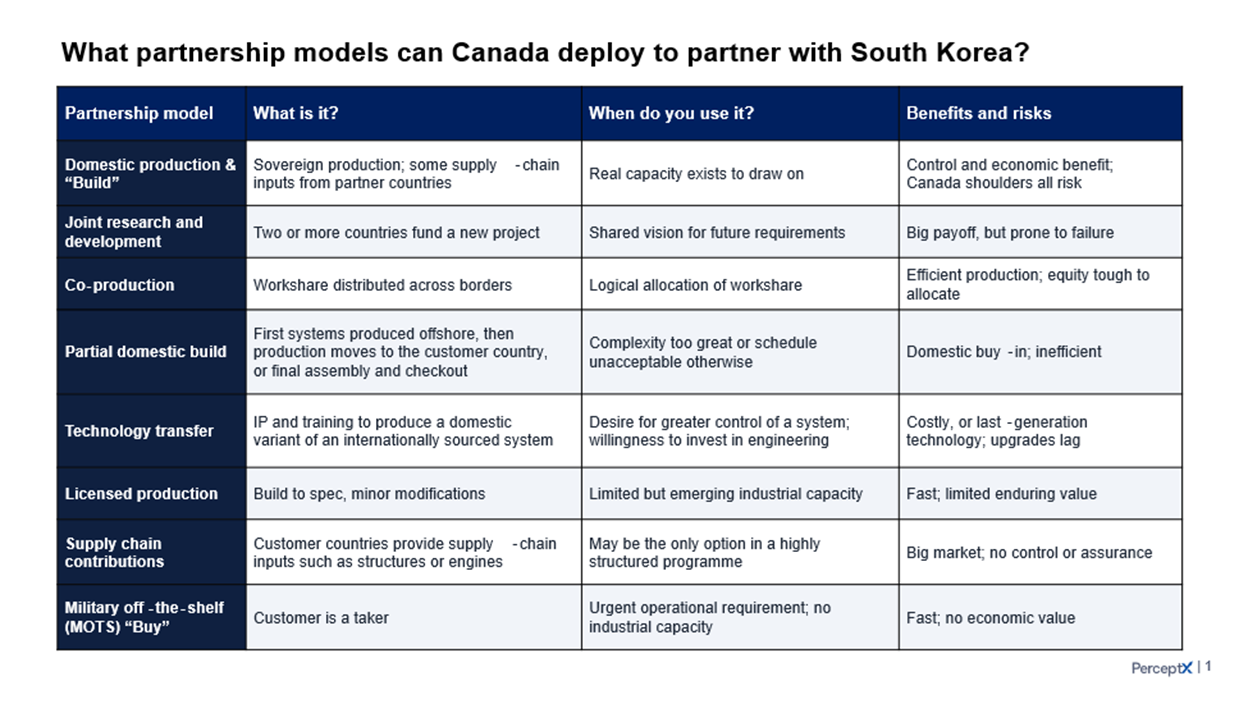
Partnership models Canada should contemplate with South Korea partners Source: PerceptX Analysis
Fifth, make the Indo-Pacific part of the TKMS deal.
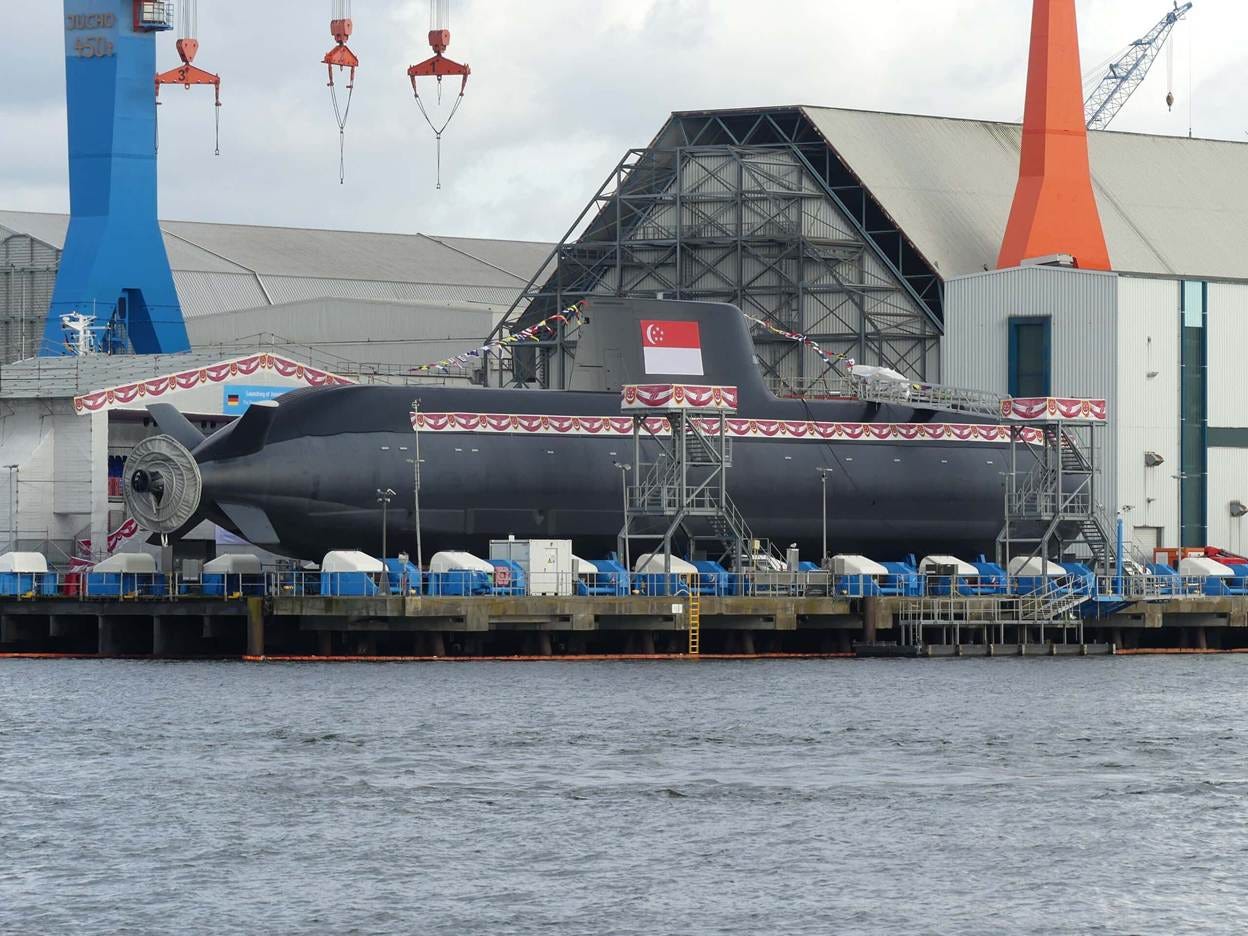
TKMS and ST Engineering have signed an MOU for a joint Submarine support hub in Singapore (Source: Asian Military Review)
Canada chose a European submarine pathway, but the RCN operates from both coasts. Any future submarine fleet will need to support Arctic, Atlantic, and Pacific missions. Canada should ask Germany, Norway, and TKMS how their regional footprint in the Indo-Pacific might support both Canadian submarines operating from Esquimalt into the Indo-Pacific, and potential market access and collaboration. This is not theoretical; Canada recently deployed a submarine to RIMPAC.
TKMS also already has regional experience through Singapore and the Type 218SG program. Recently TKMS and ST Engineering signed an MOU. During the signing a TKMS executive said the company is creating a “high-performance maintenance and service network in Singapore — for the benefit of the Republic of Singapore Navy, and our international partners.” Canada has just become one of those partners.
Canada should use that footprint to improve serviceability, spares access, technical reach back, crew familiarization, maintenance planning, and regional sustainment options.
Conclusion
Canada chose Europe for submarines. That should strengthen the transatlantic relationship, but it should not narrow Canada’s options to engage partners in the Indo-Pacific.
The world is watching whether Canada has matured as a defence market and industrial partner. How Canada manages Germany, Norway, South Korea, and the wider Indo-Pacific after the CPSP decision will be one of the tests.
P.S. 1,367 of you are shaping transatlantic relations with www.canadaxeurope.com. Thanks for being a part of it!
P.P.S. for more from Mike, check out www.canadaxindopacific.ca

Thank you for this excellent update. Yes, Canada must continue its progress with South Korea in maintaining defence ties. And further, as you state, ensure that these conditions are met through the TKMS announcement.