


For the highlights:
Restoring spending credibility: A decisive return to hard capabilities, marked by the icebreaker comeback, NORAD Modernization, the submarine down-select, lingering F-35 uncertainty, and the hard budget math of Budget2025, framed against NATO benchmarks of 2%, 3.5%, and even 5%.
Geopolitical uncertainty and diversification: Defence diplomacy accelerated, with high-level state and ministerial visits involving the UK, Sweden, Finland, France, and Germany, underscoring Canada’s push to diversify partners amid a less predictable security environment.
Institutional reform: The launch of the Defence Industrial Agency (DIA) signals a structural shift from episodic procurement to a more deliberate, industrial-policy-driven approach to defence.
This is canadaxeurope, a mash-up of what really matters in defence, trade and business across the Atlantic. Containing practical insights, field notes, connections and headlines.
Here’s a recap of the play-by-play of what matters this year:
December
The Government of Canada’s new Buy Canadian Policy officially came into force (effective December 16, 2025). It is a significant shift in federal procurement that prioritizes Canadian goods, services, and suppliers for major infrastructure, defence, and government projects. Confusingly transitioning to $5M in May, 2025.

Also in December, ahead of the launch of Canada’s defence industrial strategy, the federal government launched a $358M Regional Defence Investment Initiative targeted at small and medium sized businesses.
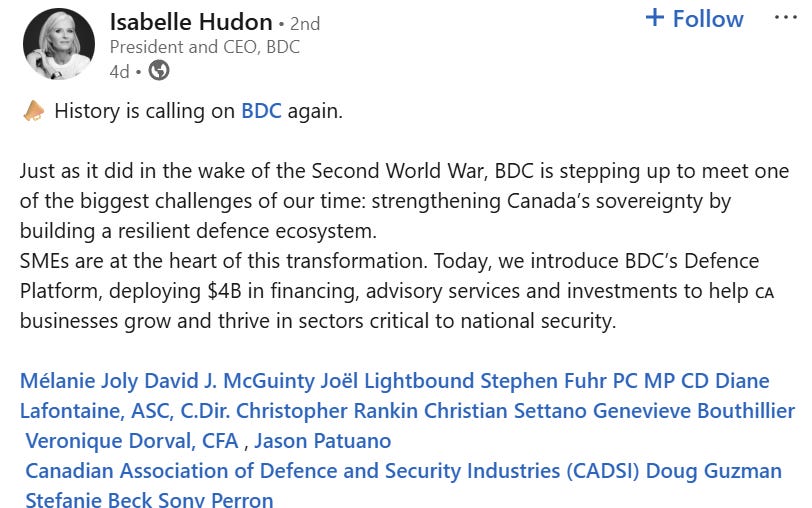
History called on the Business Development Bank of Canada (BDC) and it launched a $4B in financing, advisory services and investment to help build a resilient defence ecosystem, supporting SMEs through two main streams:
$3.5B for financing & advisory to help businesses grow, diversify, and integrate into supply chains for major defence contracts.
$500M in innovation investments, including a new venture capital fund for deep technologies with dual civilian and military uses, a dedicated fund for startups, and indirect investments in private funds.
Canada entered Security Action for Europe (SAFE).
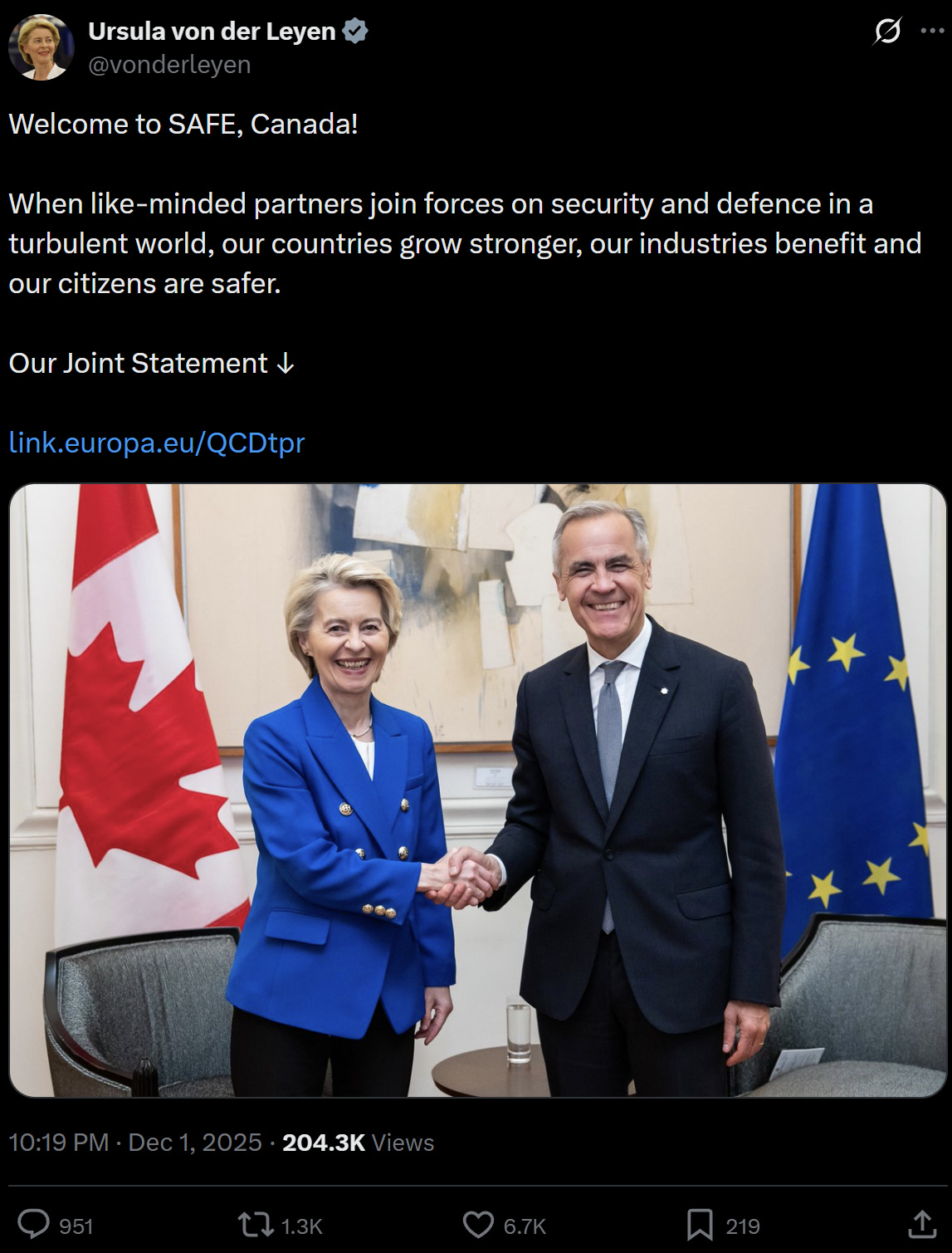
SAFE is a EU Member State loan program for large-scale defence projects. Canada became the first non-European nation to do so and was an important step to diversifying its defence industrial base.
NATO DIANA announced its 2026 cohort with a record-setting 22 Canadian companies selected as part of the Defence accelerator program.
November

Canada announced a historic investment to European Space Agency (ESA) programs ($528M), a 10x increase compared to previous contributions and is set to advance research and development of Canadian-made space technologies for both civilian and defence purposes.
Flowing River Capital (a Canadian Indigenous investment firm) acquired Marshall Land Systems from the UK-headquartered Marshall Group, making it Canada’s first defence Tier-1 indigenous firm.
Canada issued firm bidding instructions to the two companies (Hanwha, TKMS) vying to build the navy’s new submarines. The instructions to submarine contract bidders highlight sustainment, economic benefits.
Sweden and Canada pushed for closer relations alongside a royal state visit. Canada continued its review of the F35 contract, with SAAB and Sweden setting its sights on Canada diversifying its fighter-jet purchases. The BuildCanada substack referred to it as a bidding war.
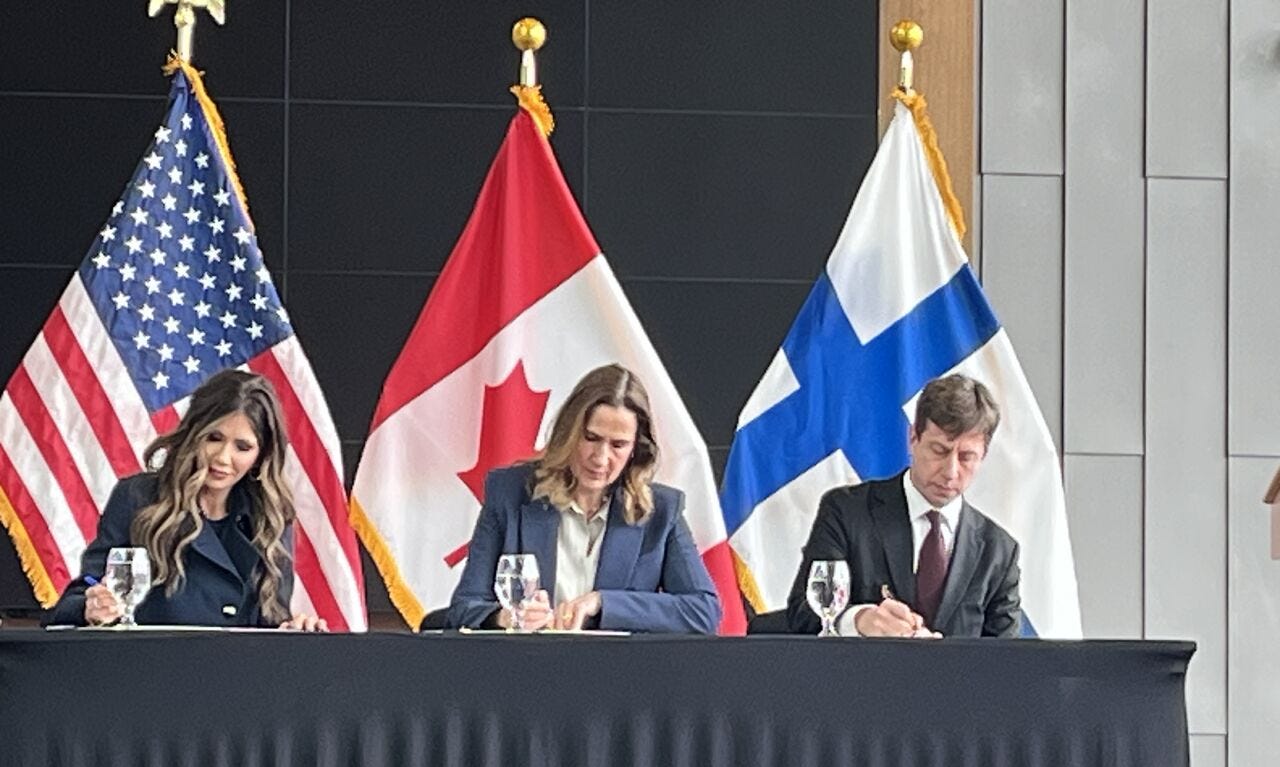
Canada, Finland and the United States signed a joint statement of Intent to advance the ongoing Icebreaker Collaboration Effort (ICE) Pact.
Germany confirmed its selection of Lockheed Martin Canada’s (LMC) Combat Management System. LMC will work closely with German industry and subcontractor Hensoldt to integrate the system into the German fleet, and will collaborate with Canadian and German research institutions.
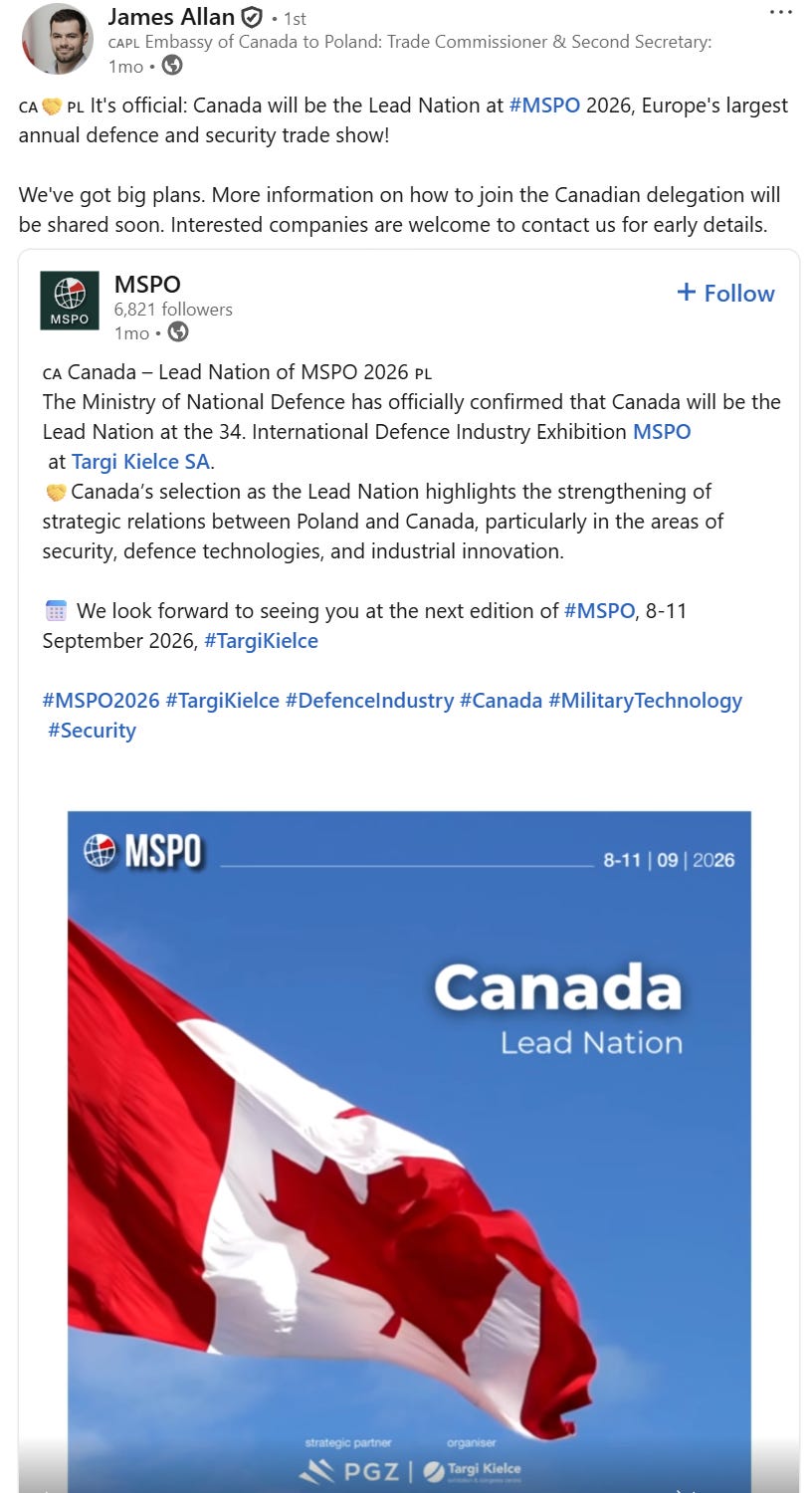
Poland selected Canada as the lead nation at MSPO 2026, Europe’s largest annual defence and security tradeshow.
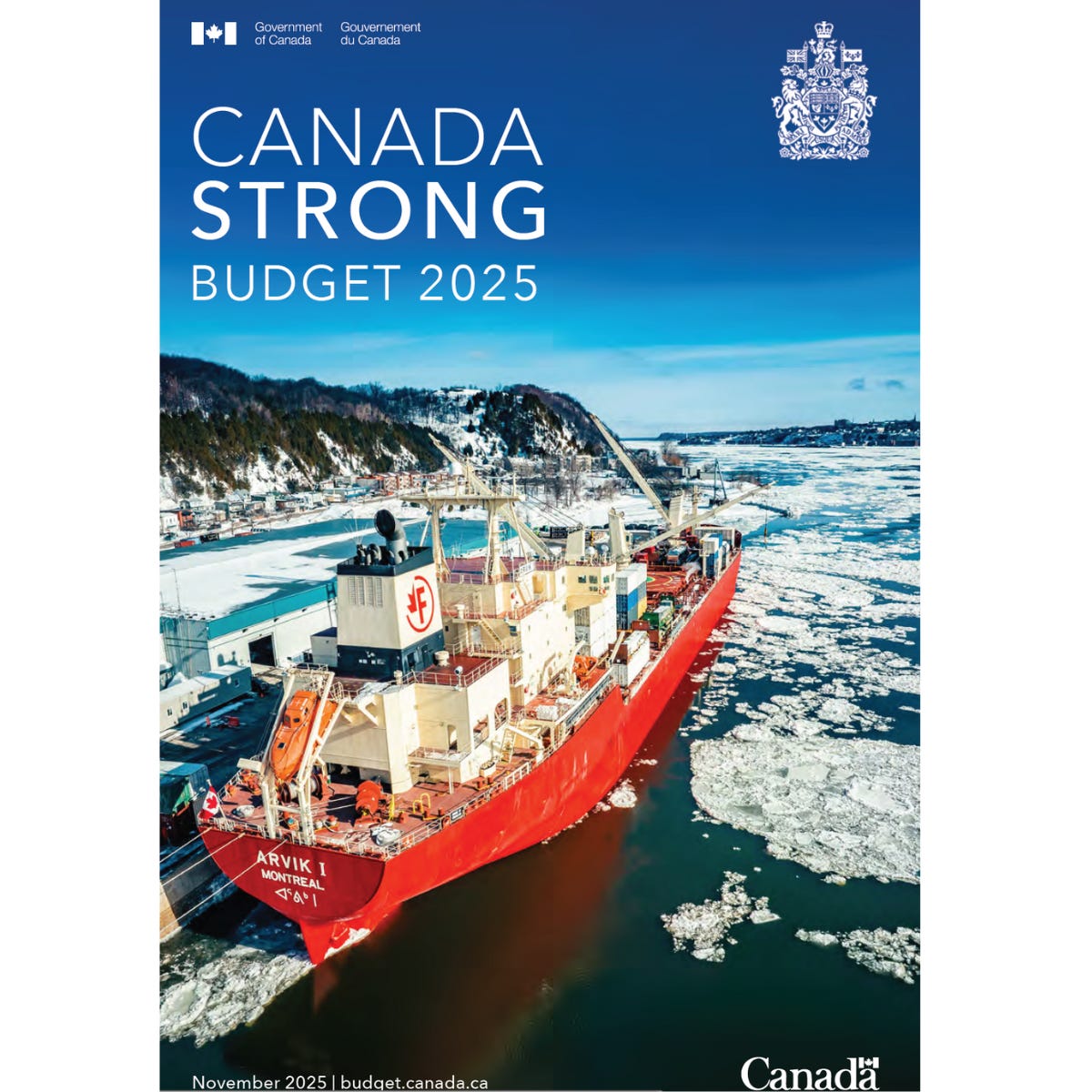
And Budget 2025 injected $81.8 billion on a cash basis over five years to Canada’s defence budget, confirming Prime Minister Carney’s new orientation to Defence.
October
Prime Minister Carney launched Canada’s new Defence Investment Agency to rebuild, rearm, and reinvest in the Canadian Armed Forces faster. Day-to-day operations will be overseen by the Chief Executive Officer (CEO) Doug Guzman.
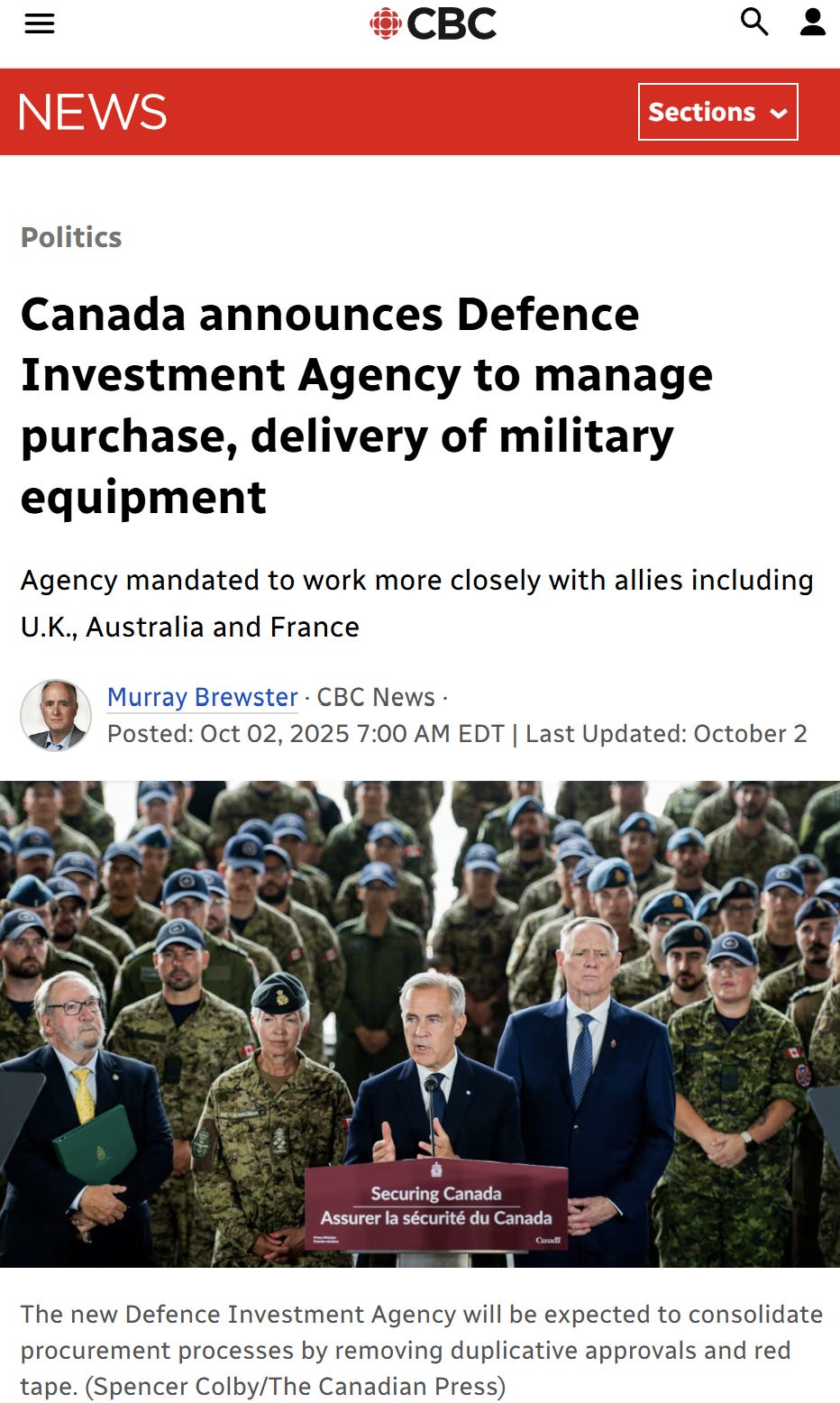
The agency is charged with fixing the long-standing broken procurement system.
Canada’s second largest defence tradeshow, DEFSEC, went international with its greatest global presence ever.
September
On Sept 2nd, the Canadian Coast Guard officially joined the Defence Team, integrating with the Department of National Defence.

Canada’s participation at DSEI, the top defence show of the year in Europe, was the largest ever. CADSI sold out its walker program, several provinces hosted trade missions, and 250+ Canadian companies attended.
Time for a bold assertion: move over Aerospace and Tech - Canada’s Defence sector is here. Times, they are a-changing, and the balance between aerospace and defence is shifting fast.
August
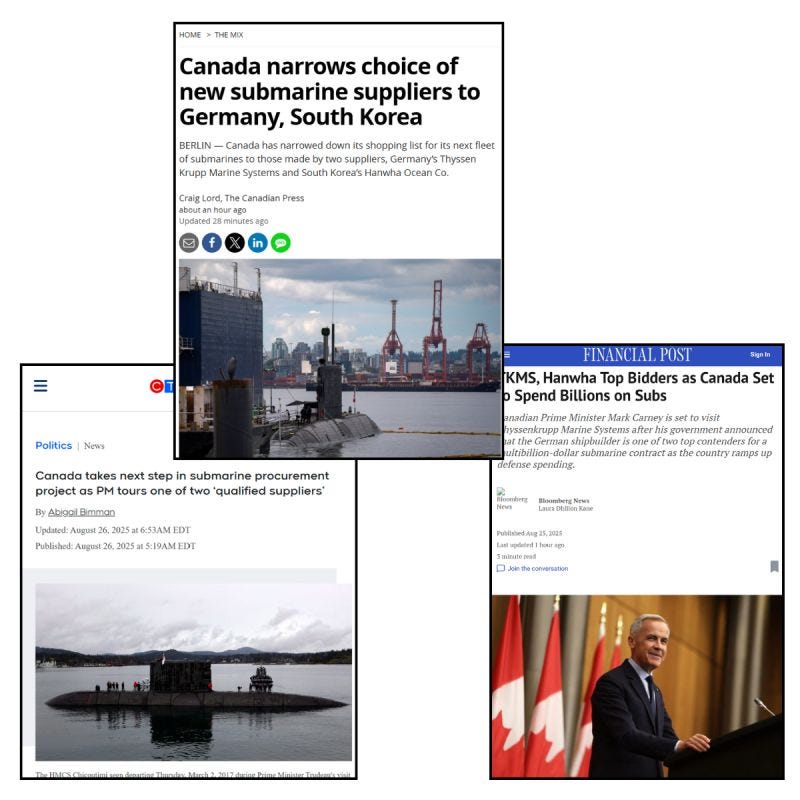
And then there were two: Canada whittled down its submarine selection to two contenders: Korea’s Hanwha and Germany’s TKMS. The Government of Canada advanced to next step in Canadian Patrol Submarine Project procurement,
The Canadian Army also released Inflection Point 2025, a generational change agenda to transition the Army into a full-spectrum fight-ready force and reducing reliance on allies for “combat enablers” like ground-based air defence, self-propelled artillery, and long-range sensors.
June
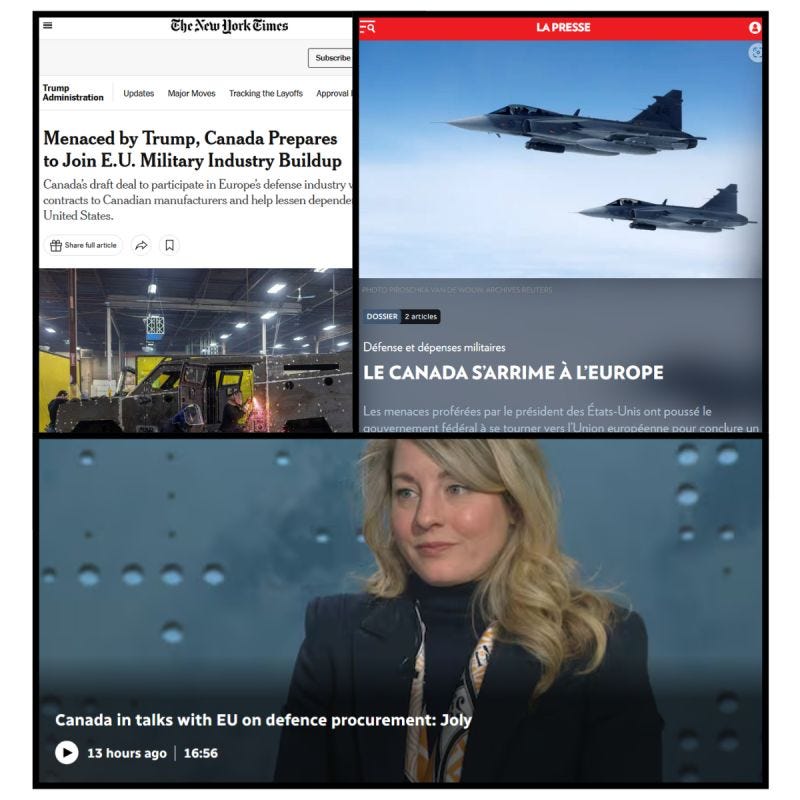
Canada announced it was signing an agreement with the EU, after hinting at it a few months earlier. The details still had to be worked out but a joint statement was adopted and a Security and Defence Partnership was signed.
Canada’s banking sector woke up to the defence sector.

In a June speech, Canada committed to making 2% a reality - rebuilding, rearming, and reinvesting in the Canadian Armed Forces - with the defence budget rising from $35B to $44B, a significant shift in topline investment, as well as several crafty accounting fixes rolling in other agencies involved in defence-related initiatives.
May
The most successful CANSEC to date wrapped up, confirming the Canadian association of defence and security industries (CADSI) event’s status as the must-attend.
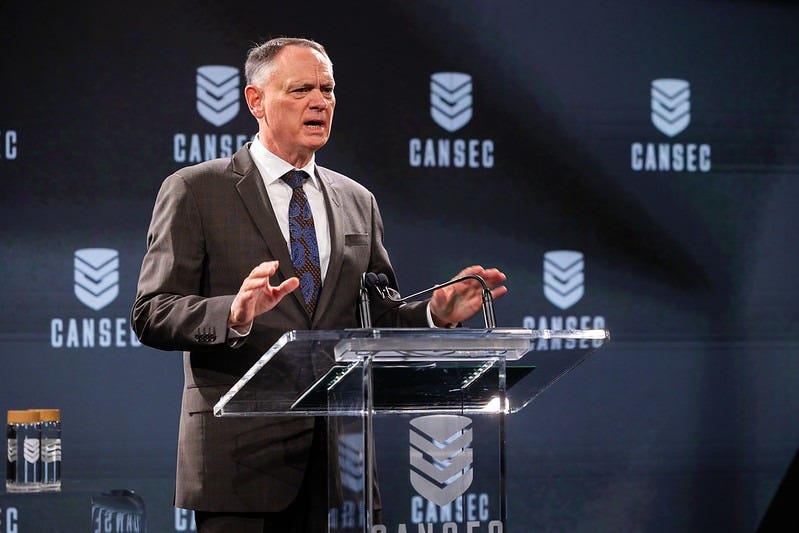
In case you missed it, the Minister of National Defence delivered a notable keynote outlining the urgency of defence spending.
The event coincided with a royal visit by their Majesties King Charles III and Queen Camilla. The visit was meant to underscore Canada’s sovereignty in the face of tensions with the US. The True North is indeed strong and free.
April
The 2025 Canadian Election saw Mark Carney become an elected prime minister, as the Liberal party took a near-majority.
March
Canada sought out new friends and closer cooperation in Europe ahead of a highly anticipated election.
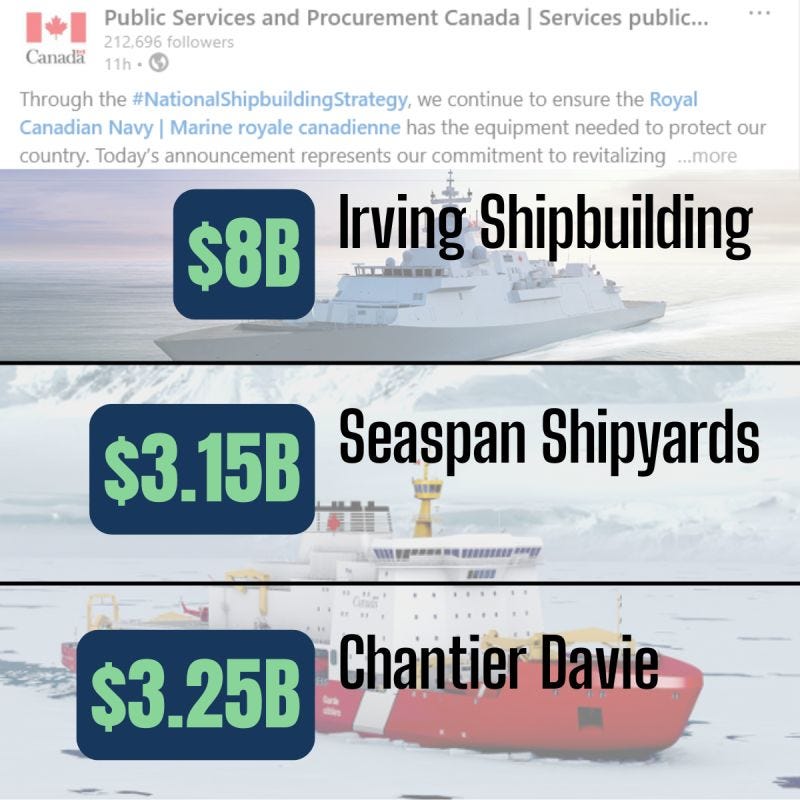
The runup to the federal elections saw over $10B in announcements just prior to the change in Liberal leadership:
--Friday March 7th--
The announcement of a $3.15B contract with Seaspan Shipyards for constructing one of two new polar icebreakers.
--Saturday March 8th--
Followed closely by a $3.25B contract with Chantier Davie to construct the PolarMax version of the Polar Icebreaker.
--Saturday March 8th--
After a technical briefing to media Friday late afternoon, PSPC announced a $8B contract to Irving Shipbuild Inc. for the next phase of the Canadian Surface Combatant (Frigate turned Destroyer) River-class program (of $22B total for three ships).
--Sunday March 9th-
New Liberal leader to be elected by the Liberal Party and declared Prime Minister soon after.
.
Prime Minister Mark Carney’s government announced a review of Canada’s F-35 fighter jet procurement in March 2025, shortly after taking office, to assess if the deal for 88 jets remains the best investment. The review drags on still.
What did I miss? What shaped your 2025? Is defence spending here to stay?
–We’re inviting contributors, recommendations, and ideas to make this a community-driven resource for people working in this transatlantic crosswind.--
Thank you for the informative review of the milestones achieved last year. I hope the government makes a submarine choice much sooner than later; as an indicator “picking up the necessary pace”.
Spot on about the submarine shortlist. PSPC's August 25 announcement confirmed TKMS and Hanwha Ocean as the two qualified suppliers for the Canadian Patrol Submarine Project, targeting first delivery by 2035. That RFI drew 25 responses, shaping the path forward. Curious how the industrial benefits will play out for Canadian yards.